Customer Loyalty Segmentation Definition, Benefits, and Strategy for Success

Customers are individuals, each with individual needs and interests. Approaching them as individuals will vastly aid your marketing efforts and increase customer loyalty to your business. Of course, outside of specific customer service situations, it's not always practical to address customers purely one-on-one, but through segmentation you can create groups of customers with similar qualities and tailor your communications to appeal to repeat customers in different groups.
Segmentation is an absolute must for any business that wants to improve its marketing and develop closer relationships with customers. This article will explain customer segmentation and its many benefits to your business.
What is Customer Segmentation?
Customer segmentation involves the grouping of customers according to certain similarities they share that differentiate them from other groups of customers. Segments can be based on all types of data, including purchase history and spending habits, typical spending amounts, length of time as a customer, and more. You can also segment customers based on demographics, which include age, gender, religion, ethnicity, household size, and other factors. Geographical location can also be an important customer segment.
The purpose of customer segmentation is to enable you to interact with, and understand, your customers in greater detail. This means you can target your marketing with more precision and handle customer service in a more informed manner. These aspects help create the best loyalty rewards programs & aid in customer advocacy.

How Does Customer Segmentation Improve Marketing?
Most people today feel that they receive too much email, and most of them aren't interested in the majority of what arrives in their inboxes. Email newsletters are still the most effective marketing channel for eCommerce, so it's vital that you create emails that can be heard above the crowd. If customers receive emails they're not interested in, at best they'll start ignoring you — and at worst, they'll report you as a spammer, which can hurt your ability to send out communications at all.
If you only send out a single version of your email newsletter, you're using a one-size-fits-all approach to your marketing, and your materials are much less likely to resonate with your customers on the same level as they would if they were better targeted. By contrast, an intelligently-segmented customer base opens up new opportunities for you to create different marketing materials to target each segment. It helps you identify your repeat customers and boost customer loyalty by providing relevant content to every subscriber.
Competent use of customer segmentation will also help you target your paid advertising more efficiently, especially when used together with the large amounts of data you can access through platforms like Facebook. Facebook displays ads dynamically based on several factors from the customer's age, gender, and location all the way down to their browsing history. If you have a great understanding of your customer segments, you can create the perfect ads to use with Facebook's high-level targeting capabilities — ads guaranteed to speak to the customer on a personal level.

Understanding and Creating Your Customer Segmentation Strategy
Creating well-thought-out customer segments requires a business to analyze a lot of information and identify what variables could mark important segments for their industry. The data you collect on your customers can be almost any possible variable, but you need to prioritize which variables would make the best sevgments for your enterprise.
For example, an apparel store could benefit from geographical segmentation because this would enable them to target customers living in different climates with marketing focused on different types of clothing. The business could send different email promotions on winter clothing to customers in Florida versus customers in Alaska. Floridian customers could receive discounts on light sweaters and cardigans, while at the same time, Alaskan customers would be offered discounts on snow jackets.
Our hypothetical apparel retailer could also use geographical segmentation to offer different products to customers based on regional styles, or use age demographics to target younger customers with different styles than customers over 65. In both these cases, the customer segments represent different types of customers likely to have differing interests in clothing. This is a great way of building customer loyalty in retail loyalty programs.
Customer segmentation can involve as many data points as necessary. Real time data helps brands to create a perfectly optimized rewards program. Segments should always be arrived at through researching and analyzing your market and the behavior of your customers. The more information you have at your fingertips, the better, so make use of every reporting and analytic tool available in your online store's Shopping Cart Software.
The Relationship Between Customer Segmentation and Loyalty Program
The last thing a customer wants is to feel like they're “just a number” to your business. Segmentation helps you create a personalized approach that makes customers feel like you understand them. This in turn makes them feel valued, in part because you “know” them well enough to send relevant promotions that don't waste their time. Segmentation based on customer loyalty helps enrich a loyalty program.
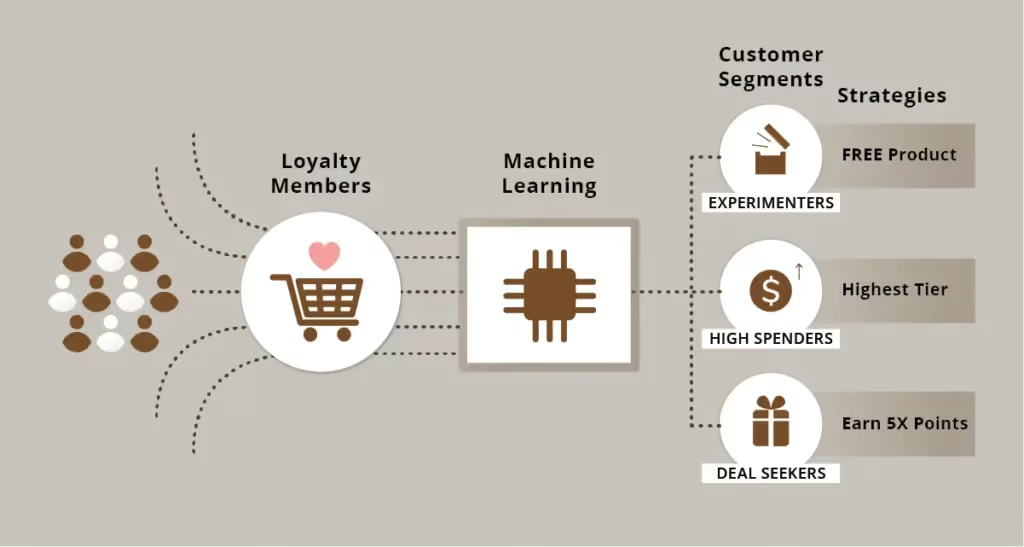
Machine learning techniques can have a great impact on the effectiveness of a loyalty program. It can help segment loyalty customers into actionable clusters. Loyalty rewards strategies can be used to target each cluster. Examples of loyalty strategies are bonus points, priority service, and free products which these may vary based on cluster dynamics. Targeted campaigns can be run against each customer cluster to maximize revenue. Thus, customer segmentation makes a loyalty program more actionable and dynamic. G2 Crowd, a leading reviews and research site, compares loyalty program software.
Benefits of Customer Segmentation
1. Personalization in the Loyalty Program
The ability to approach customers at a more personal level, is an enormous help when providing customer service. Instead of perceiving you as trying to sell to them, they start to see you as trying to help them — and this is very powerful for turning a potentially-negative interaction into a positive one, this is how customer advocacy seeps in. Customers don't tend to forget how you handle their past issues, so outstanding customer service can often gain you a customer for life, even if it started off on a bad note. A customer retention program that handles this aspect proactively helps garner repeat customers.
2. Nurturing Customers the Right Way
Segmentation also helps your business identify which customers are going to need additional nurturing; for example, new customers versus established customers, or happy customers versus customers with a history of opening angry tickets. With this information, you'll be more prepared to handle customer service and quickly identify which customer issues may need to be escalated immediately. These insights can help build customer segmentation models. To refine these segments even further, compare the customer's purchase habits, including their order frequency, average order value, and the number of discounts and reward points they use. This way, you can instantly identify the cost of maintaining relationships with these customers, so you can better allocate resources and time.
3. Tailerd Customer Experience
Another benefit of customer segmentation is a bit of a crossover between marketing and retention: by understanding your customers and their interests, you can introduce services and perks better suited to your customers than any similar services offered by your competitors. These can include everything from shipping options to loyalty programs and more. If you can meet a customer segment's needs exactly, the decision to shop from you instead of your competition will feel like a no-brainer.
4. Create the Right Loyalty Program Structure
Good use of customer segmentation will also give you useful data that can help you structure your loyalty program. Segments can inform your decisions as to where to place loyalty tiers, e.g. how much a customer needs to spend to become a VIP. This way, you can ensure customers are moving up through the tiers at the pace you prefer.
You can also use segmentation to find weaknesses in your customer loyalty program. For example, you want your customers to feel as if they're actually earning rewards at a good pace to prevent them from losing interest. If you have a number of customers who make a few early purchases and then seem to disappear, this could be a sign that they're getting discouraged. To help draw them back, you could offer bonus reward points to this segment — or if it's happening very often, rework your whole loyalty program to feel more rewarding.
Main Takeaways
Customer segmentation is a crucial part of your marketing and customer service, as well as your whole business strategy. Customer segment analysis proves effective on including relevant information, demographics, geography, psychographic and behavioral tendencies of each customer, and grouping them accordingly. This facilitates the process of creating loyalty program consumer segments. Then, learn which segments to prioritize by comparing each segment's sales with the market. This will tell you, who your most valuable customers are so you can better use your resources — and can also help you identify customers who may be too expensive to maintain.
Having a segmentation strategy in place helps scale the enterprise loyalty program for businesses. It enables them to enrich their marketing practices, customer service policies, and your enterprise loyalty program to ensure value to every customer. Always continue developing your segmentation, in case you can further refine your groups, too. Start with the basic segmentation and scale towards advanced customer segmentation techniques. By viewing new information with an analytical eye, you'll be able to seize new opportunities before your competition beats you to it– and in the process, gain customers for life.
Ready to Build Your Loyalty Program With TrueLoyal?
Learn how our holistic loyalty platform can transform your business.
More About The Author: Jimmy Rodriguez

Jimmy Rodriguez is the COO and co-founder of Shift4Shop, an ecommerce software to build SEO-friendly online stores. He's dedicated to helping internet retailers succeed online by developing digital marketing strategies and optimized shopping experiences that drive conversions and improve business performance.
Twitter Profile: Jimmy Rodriguez