4%of new Black Friday 2024 customers made a second purchase within 12 months.
75%of the ones who came back made that purchase during Black Friday 2025.
Source: Ometria, repeat purchase behavior across its retail client base.
So most of the buyers who returned waited a full year and came back during the next big sale. That's the part I can't stop thinking about, because it makes me think a lot of holiday customer retention is really next year's promotion doing the work.
Ometria pulled that from its own client base, so it isn't every brand, but it isn't the only data that looks like this. BS&Co tracked more than 8,000 first-time Black Friday and Cyber Monday buyers across several direct-to-consumer brands in 2025, and by 90 days, 11.5% had bought again [2]. Those two studies measure different brands in different ways, so I wouldn't average them.
Right now, three weeks out, your creative is locked, or should be, and the promo calendar is color-coded within an inch of its life. I wrote about the follow-through problem after Black Friday in September, and think of this as the meeting agenda version. If I were running retention today, these are the five questions I'd bring to my next retention meeting.
1. How many of our Black Friday buyers will we actually be able to name?
Start with the number that rarely makes the dashboard. Of every order you take over Cyber Week, what share can you tie to a real person you're allowed to contact again?
On your own site, guest checkouts, second email addresses and gift purchases all chip away at it. And if you also sell through retailers, most of your weekend volume goes to people you'll never meet unless they tell you who they are. Receipt scanning is one way to get that introduction.
The math is simple. Take last year's Cyber Week orders, then count how many came from someone with an email or phone number you have permission to market to. Divide the second number by the first, and that's your capture rate.
Ask for the number. If your team can't produce it, that's an answer too, and it's the ceiling on everything else on this list.
2. What did last year's Cyber Week buyers actually do?
Before you plan this year, look at last year. You already have the data, and a lot of teams never pull it before the next Black Friday.
Take the people who bought from you for the first time over Cyber Week 2025 and follow them forward. How many bought again within 30, 60 and 90 days? How many waited until a sale? What did the ones who came back buy the second time, and did it look different from what they bought the first time?
This gives you your own version of the numbers above, which is worth a lot more than an industry benchmark. It also tells you whether last year's discount brought in people who stuck around or people who were only there for the price. If it's mostly the second group, that's something to bring into this year's discount conversation before the codes go out.
3. What do we say to a new buyer in the first 48 hours?
A first-time buyer is paying the most attention to you right after they click buy. They're watching for the confirmation, the shipping update and the box. That window is short, and most brands fill it with order numbers and tracking links.
Now add a holiday twist. A lot of what sells over Cyber Week is a gift, which means the person who bought it and the person who'll use it are two different people. Your buyer may never buy that product for themselves, and the person who actually falls in love with it doesn't know you exist.
So ask your team two things. What does the buyer receive in those first two days, and does any of it give them a reason to stick around? And if it's a gift, is there any way for the person opening it to find you, whether that's a note in the box, an insert or a simple way to register the product and join the program?
That could be a thank you that sounds like it came from a person, a welcome to the program with the points they just earned, or a useful tip for the product they bought. And please make those messages automated. In Klaviyo's 2026 benchmarks across more than 183,000 of its customers, automated flows averaged a 5.58% click rate, compared with 1.69% for one-off campaigns [3]. Flows are triggered by something the shopper just did, so it isn't a perfect comparison, but that timing is exactly the point here.
What neither of them should get in the first 48 hours is another discount code. If another sale is the first thing they hear from you, you've taught them exactly when to come back.
4. What is our holiday customer retention plan for February?
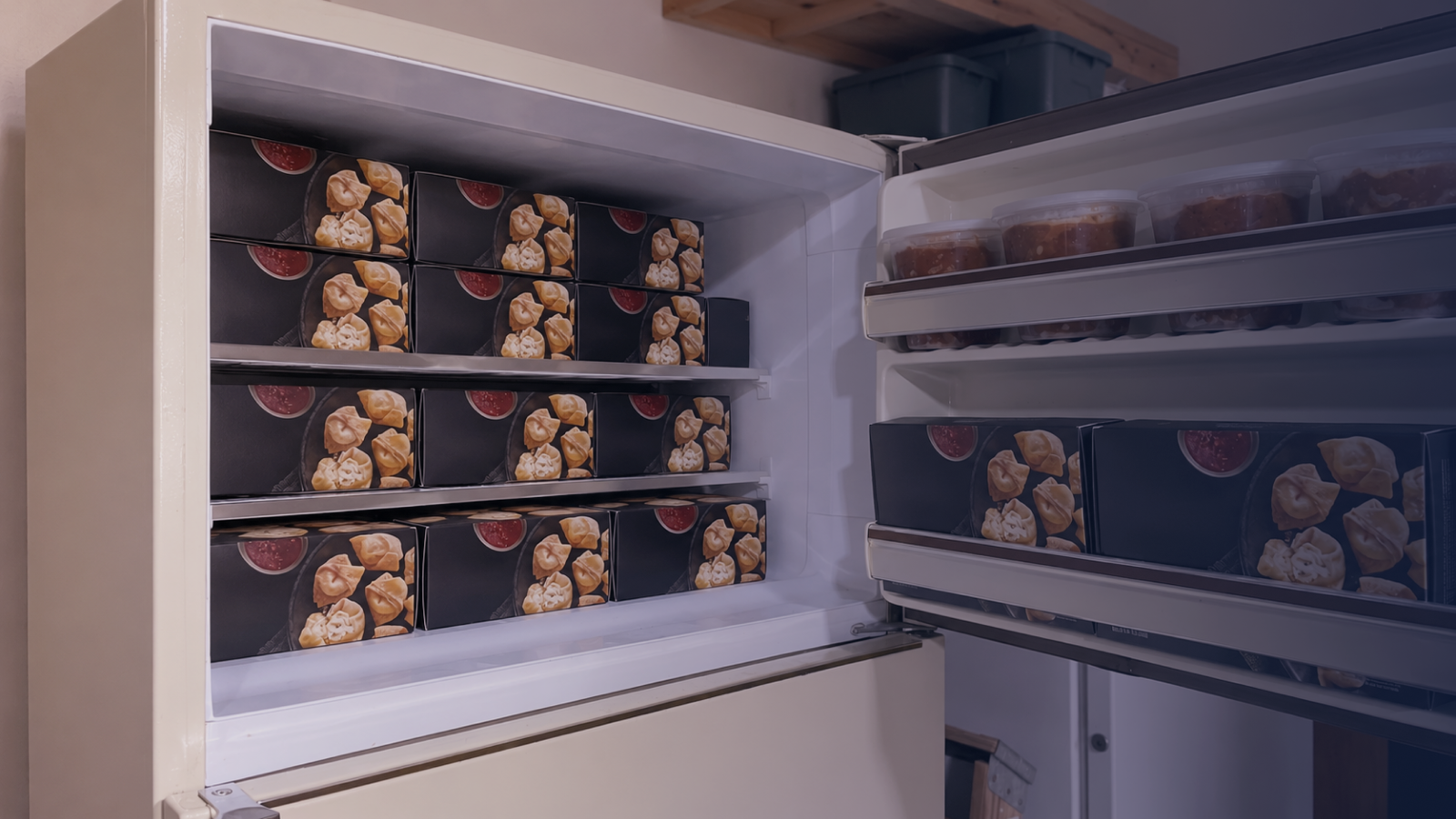
This one is personal for me, because I've watched it happen on a program I ran. Our Cyber Week discounts were so deep that people would come in and stock up. And once they'd stocked up, they didn't come back for months. It's a lot like the freezer at the top of this post. When it's packed that full, nobody is buying more of that item for a while, no matter how good the next deal is. A lot of them were one and done, too. They came in, got the deal and left. The real problem was that nothing about the offer was designed for what we actually needed, which was a strong first quarter the following year.
So ask your team how this year will be different. Start by tagging this year's Cyber Week buyers as their own group the day they buy, so you can run the same 30, 60 and 90 day look you did on last year's group.
Then give them a reason to come back before next year's sale. That could be a reminder when a product they use up is probably running low, a member benefit they can use in January, or a product they haven't tried that fits what they already bought.
And look at the members in that group separately. Did the people who joined the program behave any differently from the ones who didn't? If you want to know whether the program caused that difference, this is how I'd measure it.
5. Who owns the second purchase, and what number will we hold them to?
Acquisition and the weekend itself both have an owner and a number. The second purchase usually sits somewhere between three teams, and nobody reports on it until someone asks in March why the holiday group went quiet.
Picture the hand-offs. Growth brings the buyer in over the weekend. Ecommerce ships the order. Retention sends the emails in January. Each team can point to its own piece, and no one team is watching whether the buyer actually came back.
So pick one owner. Agree on the number, whether that's the share of Cyber Week buyers who buy again within 90 days or something that fits your business better. Then report on it every week through the first quarter, the same way you reported on the weekend.
Three weeks out is not the time for a new system, and none of this needs one
I know your team is already stretched, and nobody wants to be the person who changed something the week the volume hit.
The good news is that none of these questions need a new system. The first, second and fifth are numbers and names. The third and fourth are a handful of messages, a box insert and a saved audience, and most of that can be built in the tools you already have.
If one of these questions turns up something you can't fix in three weeks, write it down and plan to fix it in January, before next year's offer gets built the same way.
Take these into the room and see which ones get a pause
The five questions, and what to bring to the meeting| Question | What to bring |
|---|
| 1. How many of our Black Friday buyers will we be able to name? | Your capture rate, the share of Cyber Week orders tied to someone you can contact again |
| 2. What did last year's Cyber Week buyers actually do? | Repeat rates for 2025 first-time buyers at 30, 60 and 90 days, and how many waited for a sale |
| 3. What do we say to a new buyer in the first 48 hours? | Every message a new buyer gets in those two days, and how a gift recipient finds you |
| 4. What is our holiday customer retention plan for February? | This year's Cyber Week buyers tagged as a group, and the reasons to come back before next year's sale |
| 5. Who owns the second purchase, and what number will we hold them to? | One named owner and the second-purchase number you'll report every week |
You don't need a big presentation for this. Put the five questions on one page and walk through them with your team. The ones that get a quick, confident answer are in good shape, and the ones that get a pause are the ones to work on. If you want a fuller list to work from, I built a BFCM readiness checklist that covers the look back, the offer build and the measurement setup, so reach out to our team and we'll send you a copy. Either way, it's a lot better to find that pause in early November than in March.
Frequently Asked Questions
How many Black Friday customers buy again?
Fewer than most brands expect. In Ometria's retail client data, only 4% of new Black Friday 2024 customers made a second purchase within 12 months, and 75% of those who did came back during Black Friday 2025. BS&Co found 11.5% of first-time Black Friday and Cyber Monday buyers in 2025 had bought again within 90 days.
What is a customer capture rate?
It's the share of your orders that you can tie to a real person you have permission to contact again. To calculate it, take your Cyber Week orders and divide the number that came from someone with a marketable email or phone number by the total.
How do you get holiday customers to buy again?
Tag holiday buyers as their own group the day they buy and check what they do at 30, 60 and 90 days. Then give them a reason to come back before the next sale, such as a timely replenishment reminder, a member benefit they can use in January or a product that fits what they already bought, and make one person accountable for the second purchase.
What should you send a new customer after Black Friday?
In the first 48 hours, send automated messages that give the buyer a reason to stay, like a genuine thank you and a welcome to your program, and avoid leading with another discount code. If the purchase was a gift, give the person who receives it a way to find and join your brand.
Sources
- Ometria, Black Friday 2025 data (December 12, 2025). Repeat purchase behavior of Black Friday 2024 new customers across Ometria's retail client base over the following 12 months.
- BS&Co, BFCM cohort retention benchmarks (published February 16, 2026, updated September 2026). 8,076 first-time buyers across multiple direct-to-consumer brands who purchased November 24 to December 2, 2025, tracked at 30, 60 and 90 days.
- Klaviyo, email marketing benchmarks 2026. Click rates for automated flows and campaigns across more than 183,000 Klaviyo customers.
About the author
Amanda Boshell is a Product Marketing Manager at TrueLoyal. She spent twelve years as a loyalty practitioner before moving to the platform side, across agency, tech, and retail, in roles spanning program operations, strategy, and marketing. She has sat on both sides of the table, as the operator running the program and as the buyer evaluating the platforms.