The shelf-to-app journey is the path a shopper takes from picking up a brand's product in a store to appearing as a known member in the brand's own app or program. A brand that sells through retailers does not own the checkout, so a step after the purchase, such as scanning the receipt, connects the sale to a person.
The journey starts in a store, where a shopper picks up the product. The brand does not run the checkout, so it adds something the shopper can act on after the purchase. Most often that is a QR code on the pack, a sign in the aisle, or a prompt on the receipt or in an ad. The shopper scans it, opens the brand's app or sign-up page, and creates an account.
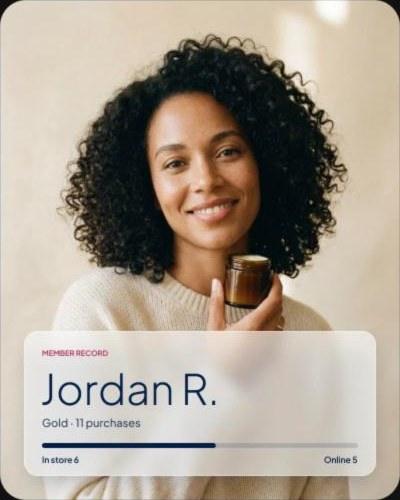
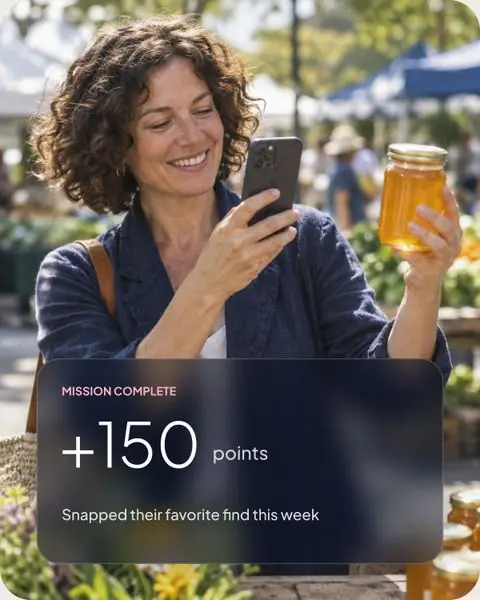
The next step connects the purchase to the account. With receipt scanning, the shopper submits a photo of the receipt. The program reads the lines and matches them to the brand's product list (see UPC matching). A match makes the purchase count, and the member record is updated. The member can then earn a reward or take part in what the brand offers next.
Each step asks for effort, so some shoppers drop out at each one. A short path with a clear reason to continue keeps more of them.
For a brand that sells through retailers, the sale happens in someone else's store, and the brand often cannot tell who bought. The journey is how a store purchase becomes a named member the brand can learn from. Without it, the brand sees POS data and market estimates, but not people.
It also shows where the path breaks. If many shoppers scan the code but few submit a receipt, the problem is in the middle of the journey, and the brand can fix that step.
A coffee brand sold in grocery stores puts a QR code on each bag. A shopper scans it at home, creates an account, and is asked to submit the receipt from the purchase. The program matches the coffee on the receipt to the brand's list, adds the purchase to the member's record, and gives the member a welcome reward. The brand now knows a named member bought its coffee, and it can see how many shoppers who scanned the code finished the whole path. This example is made up to show the idea.
A common mistake is counting code scans as members. A scan shows interest, but it doesn't tell the brand who bought. A member is someone who created an account and, if the brand wants proof of purchase, submitted a receipt that matched. Track each step separately so a high scan count does not hide a weak step later in the path.
Where TrueLoyal® fits: With receipt scanning, members scan receipts from any store and the brand sees who bought, where, and what. This covers only the shoppers who take part, so it sits alongside retailer data and does not replace it.
No. It is a working label that no standards body defines, and vendors don't all use it the same way. Related ideas go by other names, such as in-store to in-app. This entry uses it for the steps between a store purchase and a known member.
The retailer runs the checkout and keeps the shopper's details. The brand may see sales by product and store, but not the buyer. A step the shopper takes, such as scanning a code or a receipt, is what links the sale to a person.
Shoppers need a reason to share, such as a reward, an offer, or something useful about the product. Each step asks for effort, so the fewer steps and the clearer the reason, the more shoppers finish. Rules for marketing messages differ by channel and country, so record consent when you collect contact details.
It counts how many shoppers scan the code, how many create an account, and how many submit a receipt that matches a product. The step with the biggest fall is the first to fix.
A third-party retail channel is any route to market where a brand's product is sold by another company, in that company's store, on its shelf, and through its checkout. Grocery chains, mass retailers, drugstores, specialty stores, and online marketplaces are all third-party channels. The term is used to distinguish these sales from the ones a brand makes directly through its own website or stores.
First-party data in CPG is information a consumer packaged goods (CPG) brand collects directly from buyers, members, subscribers, and site visitors, covering what they share and what the brand observes. When a brand sells through retailers, the store runs the sale, so the brand collects its own data through its own channels. Data a retailer shares back is second-party data.
UPC matching compares the product code on a receipt line with a brand's product list to find the brand's items. A UPC, or Universal Product Code, is the 12-digit UPC-A number under a barcode that identifies one specific item, such as one size and flavor. When a receipt prints no code, programs match on the printed name or keywords instead.
POS data is the record of sales captured at the point of sale, which is the register or checkout where a transaction happens. It shows what sold, in what quantity, at what price, in which store, and when. For brands selling through retail, it is the most direct count of how many units actually moved to shoppers.
Zero-party data is information a customer deliberately shares with a brand, such as product preferences, purchase plans, or how they want to be contacted. Brands can collect it through surveys, polls, quizzes, and profile questions, and some offer a reward for answering.