Beyond One-Size-Fits-All: Hyper-Personalization in Loyalty Programs
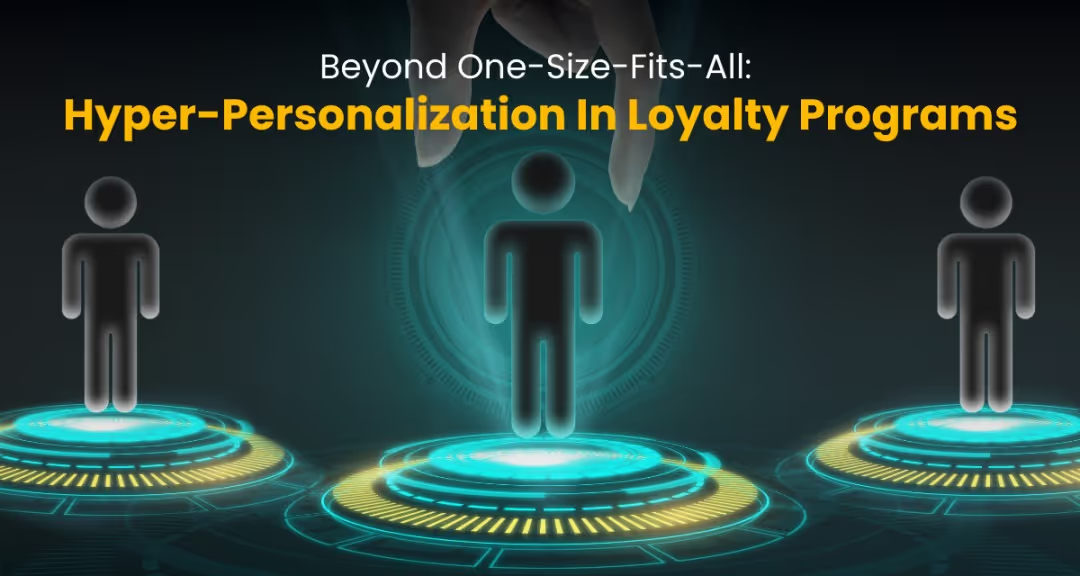
I see the customer engagement landscape undergoing a paradigm shift. While most loyalty programs offer generic rewards to customers regardless of their preferences, I believe the future of customer engagement lies in hyper-personalization. In fact, Salesforce states that 73% of customers expect better personalization, and 80% say that the shopping experience is as important as products and services.
But what exactly is hyper-personalization, and how can you use it to transform your loyalty practices?
Hyper-Personalization: Beyond Demographics
- Goes beyond basic demographics (age, gender, location).
- Uses purchase history, preferences, and online behavior for tailored experiences.
- Creates personalized in-store or online recommendations.
- Enables early access to new products and exclusive rewards.
- Elevates customer experience from transactional to engaging.
Hyper-personalization goes beyond knowing your customer's age, gender, and location. It includes detailed data about their preferences, purchase history, and online behavior to help create experiences that truly resonate. In fact, 86% of companies report a measurable business boost from personalization.
Imagine walking into a store where the staff knows your style and can help pick out the clothes you love. Or think of a loyalty program that offers early access to new products.
As a leader and founder of a loyalty platform, I've seen how hyper-personalization can elevate the customer experience from transactional to truly engaging, fostering a sense of being understood and valued. However, the key to achieving this is having accurate data.
The Importance of Clean Data: Building Trust
Toward hyper-personalization, collecting accurate customer information is essential. Inaccurate or irrelevant information can lead to misfired recommendations and a frustrating customer experience. While 28% of the customers say their trust levels have dropped, most businesses are unaware of that.
Here's why clean data is crucial for effective hyper-personalization.
- Improved targeting: Imagine bombarding a vegetarian with steakhouse recommendations simply because they live in Hereford, Texas, the beef capital of the world. Not exactly a recipe for loyalty, right? Clean data ensures you're targeting customers with offers and rewards that are relevant to them.
- Enhanced relevance: Personalized recommendations based on accurate data feel genuine and show customers you truly understand their needs. This helps build trust and encourages further engagement.
- Boosted engagement: When customers receive relevant offers or rewards, they're more likely to interact with your loyalty program. This translates to overall increased program participation and customer lifetime value.
However, a combination of new privacy regulations, frequent data hacks, and heightened consumer awareness is making it harder than ever to collect data. So, how can loyalty programs encourage customers to share accurate data and participate in hyper-personalized experiences?
The Power Of Value Exchange
Customers need to understand how their data is used and what value they'll receive in return for sharing it. In addition to clear opt-in options and a robust data privacy policy, look to create a compelling value exchange in order to boost your data acquisition strategy. Loyalty programs can play a critical role in getting this data. Here are some strategies.
- Surveys and Quizzes: You can create a compelling value exchange for customers to share their preferences by offering them bonus points. In a global survey, 93% of respondents were willing to trade their personal and preference data in exchange for loyalty rewards.
- Receipt Scanning: Brands that sell their products through third-party retail channels have no visibility into their customers. By creating a loyalty program where customers can earn points for submitting their purchase receipts, you can collect invaluable zero- and first-party data.
By demonstrating the value proposition of hyper-personalization and prioritizing data security, your loyalty programs can build trust and encourage active customer participation. Here are a few steps to get you started:
- Clearly communicate the value proposition. Explain how customer data will be used and what they receive in return.
- Offer incentives for sharing preferences. Use surveys, quizzes, or profile completion bonuses to collect first- and zero-party data.
- Encourage purchase data sharing. Implement receipt scanning programs to capture transactions from third-party retail channels.
- Reinforce trust with privacy measures. Maintain transparency, follow regulations, and assure customers their data is secure.
- Demonstrate benefits of personalization. Show how shared data leads to better recommendations, exclusive offers, and improved rewards.
Personalizing The Loyalty Experience: A Few Examples
In exploring some real-world examples of hyper-personalized loyalty programs, I think Starbucks Rewards is a good example. The company uses purchase data to recommend new drinks based on your previous orders, encouraging exploration and trial of new products.
Another example is Sephora Beauty Insider, which analyzes past purchases and browsing behavior to send personalized coupons and recommendations for beauty products. Perhaps most famous is Amazon Prime. From personalized recommendations to exclusive early access to deals, Amazon leverages customer data to personalize the shopping experience.

The Changing Customer Journey: From Generic To Genuine
The impact of hyper-personalization extends beyond rewards. It fundamentally changes the customer experience within loyalty programs, offering increased engagement, enhanced brand loyalty, and improved customer lifetime value.
The key is to cater to individual needs and preferences, make the customers feel understood, create a stronger emotional connection, drive repeat business, and ultimately encourage them to spend more.
Hyper-personalization can transform your loyalty programs from a static point-collection system into a dynamic ecosystem that caters to individuals. It's a win-win situation for brands and customers, fostering a deeper connection and driving long-term business success.
The Road Ahead: Embracing The Hyper-Personalized Future
The hyper-personalization trend is here to stay, and loyalty programs are poised to be at the forefront of this exciting revolution. By embracing data-driven insights and creating personalized experiences, brands can unlock a new level of customer engagement and loyalty. Here are some key takeaways.
- Prioritize data quality: Invest in clean data collection practices to ensure accurate insights and effective targeting.
- Build trust: Be clear about your data practices and the value proposition for customers who share information.
- Go beyond demographics: Leverage a variety of data points to create a holistic view of your customers and their needs.
- Personalize the entire journey: Hyper-personalization extends beyond rewards. Using your strong data, look to tailor communications, offers, and program elements for a unique experience.
- Embrace continuous optimization: I've found that A/B testing and data analysis are crucial for constantly refining and improving your hyper-personalization strategies.
By following these steps and embracing the power of hyper-personalization, I'm certain that your loyalty program can evolve from a one-size-fits-all approach to a dynamic ecosystem that creates true customer loyalty. The future of customer engagement is personal, and I believe the brands that embrace this shift will be the ones that thrive.
FAQs
How can loyalty programs ensure data privacy while personalizing?
By collecting only essential data, using secure systems, and clearly communicating how information is used. Transparency builds trust.
What’s the first step to start hyper-personalizing a loyalty program?
Begin with clean, unified customer data. Accurate data enables relevant offers and personalized engagement.
How does hyper-personalization improve customer engagement?
It makes customers feel understood. Personalized rewards and messages lead to higher participation and stronger loyalty.
What kind of data powers hyper-personalization?
Zero- and first-party data—like purchase history, preferences, and interactions—form the foundation for personalized experiences.
How can brands encourage customers to share their data?
Offer clear value exchange, such as bonus points or exclusive access, and assure them of strong privacy practices.
What are common mistakes to avoid in personalization?
Using inaccurate data, sending irrelevant offers, or neglecting privacy concerns can erode trust and engagement.
What role does AI play in hyper-personalized loyalty programs?
AI helps analyze large data sets, predict behavior, and deliver real-time personalized recommendations.
This article was last updated in October 2025 and is reviewed regularly to include the latest insights and trends in hyper-personalized loyalty programs.