The Future of Hospitality Marketing

Hospitality is bouncing back.
After getting hit hard by the COVID-19 pandemic, we're seeing travelers getting ready to book their next vacation. Fifty-six percent of consumers say they expect to travel for leisure in 2021, which is about the same amount of consumers traveling in an average year.
But, we can't act like traveling is the same as it used to be.
The American Hotel and Lodging Association found “enhanced cleaning and hygiene practices rank as guests' number two priority, behind price.” Hospitality always had to be aware of marketing their commitment to cleanliness, but post-COVID-19 that commitment has to go further than ever before.
We've seen hospitality marketing switch to a clean-first approach in their marketing messaging in 2020 and part of our predictions for the future of hospitality marketing is sticking to it.
Where is Hospitality Marketing Now?
In 2020, hospitality companies paired up with medical centers to show their commitment to complying with COVID-19 guidelines (and then some). The Hilton teamed up with the Mayo Clinic and the maker of Lysol to develop new cleaning procedures. Airbnb required cleaning protocols guided by the U.S. Surgeon General. The Four Seasons hired Johns Hopkins Medicine International to provide consulting on their health and safety decisions.
The Westin Houston Medical Center even has germ-busting robots that scan their rooms with UV light that can kill bacteria, fungi, and viruses.
With their guests wanting to know they can leave their worries and COVID-19 risk at home, hospitality has had to adapt their messaging to be abundantly clear about their new protocols. These companies have had to continue to implement this messaging as countries reopen to outside travel, others go back into lockdown, and some get closer and closer to vaccinating all citizens.
And it looks like they're going to have to keep up this strategy in the year to come.
The Future of Hospitality Marketing
In short, the future of hospitality marketing is showing how safe travelers can feel in your establishment while figuring out what their new travel needs are.
For example, brands can showcase their new contactless check-ins that avoid any unnecessary contact with strangers. Marriott wrote this blog post promoting their contactless check-in option:
“Before checking in to your hotel, download the Marriott Bonvoy App and create an account, if you haven't already.
You can call the hotel the day before your trip and ask the front desk to assign you your desired room (you can even request a room on a low floor so you can take the stairs rather than the public elevator).
Once you arrive, or even beforehand, you'll be able to check into your room using your app and, if available, have a mobile room key delivered to your device.”
But that's just one part of the puzzle. As customers grow increasingly concerned with the impact travel has on pollution, talking about the sustainability of a stay at your hotel will be just as important. The interest in cleanliness and sustainability can push travelers towards unique and boutique locations (like Airbnb), where they're assured of their safety and feeling like their travel isn't negatively impacting the environment.
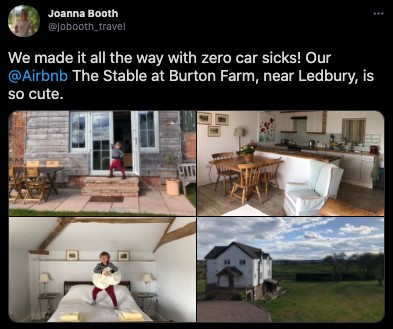
Airbnb has put a lot of emphasis on its marketing strategy in the last year, showing how their boutique experiences are exactly what travelers are looking for right now. With user-generated content, they're highlighting their guest's experiences by repurposing guest content across their socials.
How Brands Can Prepare and Adapt to Hospitality Marketing Changes
With personalized marketing becoming more widely available for marketers, it seems as the most important adaptation hospitality can have is diving headfirst into creating that experience for their customers. When brands can showcase personalization alongside the three strategies below—their fans, audience, and customers are going to feel safe. They'll feel safe to consider traveling, safe to book their reservation, and safe to arrive at your destination.
The first step is your message of safety.
#1: Messages of Safety
With travelers having cleanliness and hygiene practices as their second priority (behind price), hospitality brands can see just how important messages of safety are for their marketing campaigns.
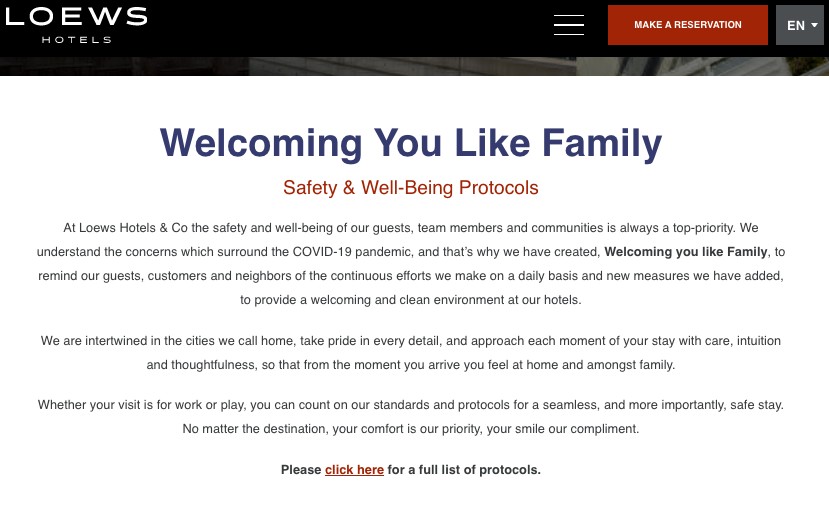
The Loews Hotel has a safety message on its website that outlines its safety and wellness protocols. If guests need extra reassurance, they have a full list of protocols they're abiding by to look through. As needed, Loews Hotel can use this safety message and its protocols across its digital and in-person marketing channels to remind its guests of its commitment to their safety.
Having safety messages is essential for hospitality brands, but showing how it's being put into use is just as important.
#2: User-Generated Content as Testimonials and Feedback
User-generated content is a photo, video, feedback, or testimonial from your fans, audience, or customers. UGC gets more engagement and conversions than brand-created content, which makes it a star player in your 2021 marketing strategy. With UGC, hospitality brands can show how their customers feel about their commitment to safety.
Hospitality brands can find UGC, collect it, and repurpose it across marketing channels. With machine learning, the TrueLoyal platform can identify what content is referencing your brand—even if you weren't tagged in the photo. Leading brands use TrueLoyal to organize UGC for their hospitality company and repost it to their digital channels, creating a stream of social media content, and building digital walls on their website showcasing happy customers.

Using user-generated content in your brand strategy leads to more engagement and conversions, but there's also another type of content hospitality brands need to tap into.
#3: Nano, Micro, and Employees as Influencers
Having a YouTuber with one million followers come and stay at your hotel in return for a video is great, but it might not be getting the conversion you hoped for. In TrueLoyal's 2020 UGC Report, we found that consumers trust nano- and micro-influencers more than celebrities (or macro-influencers). We also found that employee-generated content did wildly well, with higher engagement and shares than brand-created content.
Hospitality brands that use nano and micro-influencers alongside employee-generated content (EGC) will get more engagement—without having to spend more time creating their own content. With time, budget, and team size constraining content teams, influencers and employees can help brands content strategies (all while getting a better response than brand content!).
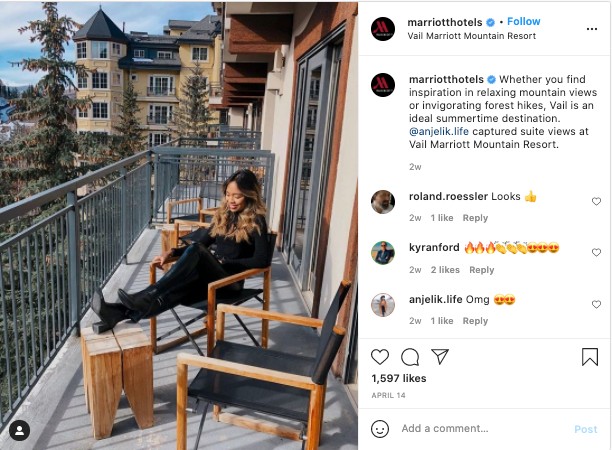
Marriott finds UGC from nano and micro-influencers and repurposes it on their Instagram channel.
Hospitality is on the rise as vaccinations roll out and travelers feel more comfortable with leaving their homes, cities, and countries. With the same amount of travelers interested in booking a trip this year as they were in average years in the past, it's go time for hospitality marketing.
With messages of safety, user-generated content, and the use of smaller influencers (including employees!), hospitality brands can show travelers that their destination has their best interest in mind.
Subscribe here to receive weekly Future of Marketing insights and strategies.