Why Receipt Scanning Bridges Big-Box Retail and Direct Loyalty
By Amanda Boshell, Product Marketing Manager at TrueLoyal
If you have ever sat on the brand side of a consumer goods business, you know the report I am about to describe.
It tells you what sold, how quickly the product is moving off the shelf, enough about share, placement and performance to know whether things are moving in the right direction or whether your next buyer meeting might be a little uncomfortable.
All very important things.
But say I am trying to understand preference and consumer buying behavior.
I want to know whether one household bought from me four times or four households bought from me one time. And, unfortunately, that report cannot tell me.
Now we run into the problem.
Because those are two completely different customer stories. One says I am doing a great job getting trial. The other says I may actually be building repeat behavior.
But if I cannot tell those apart, I have a really hard time saying anything meaningful about preference, household penetration or whether the things I am doing are actually changing customer behavior.
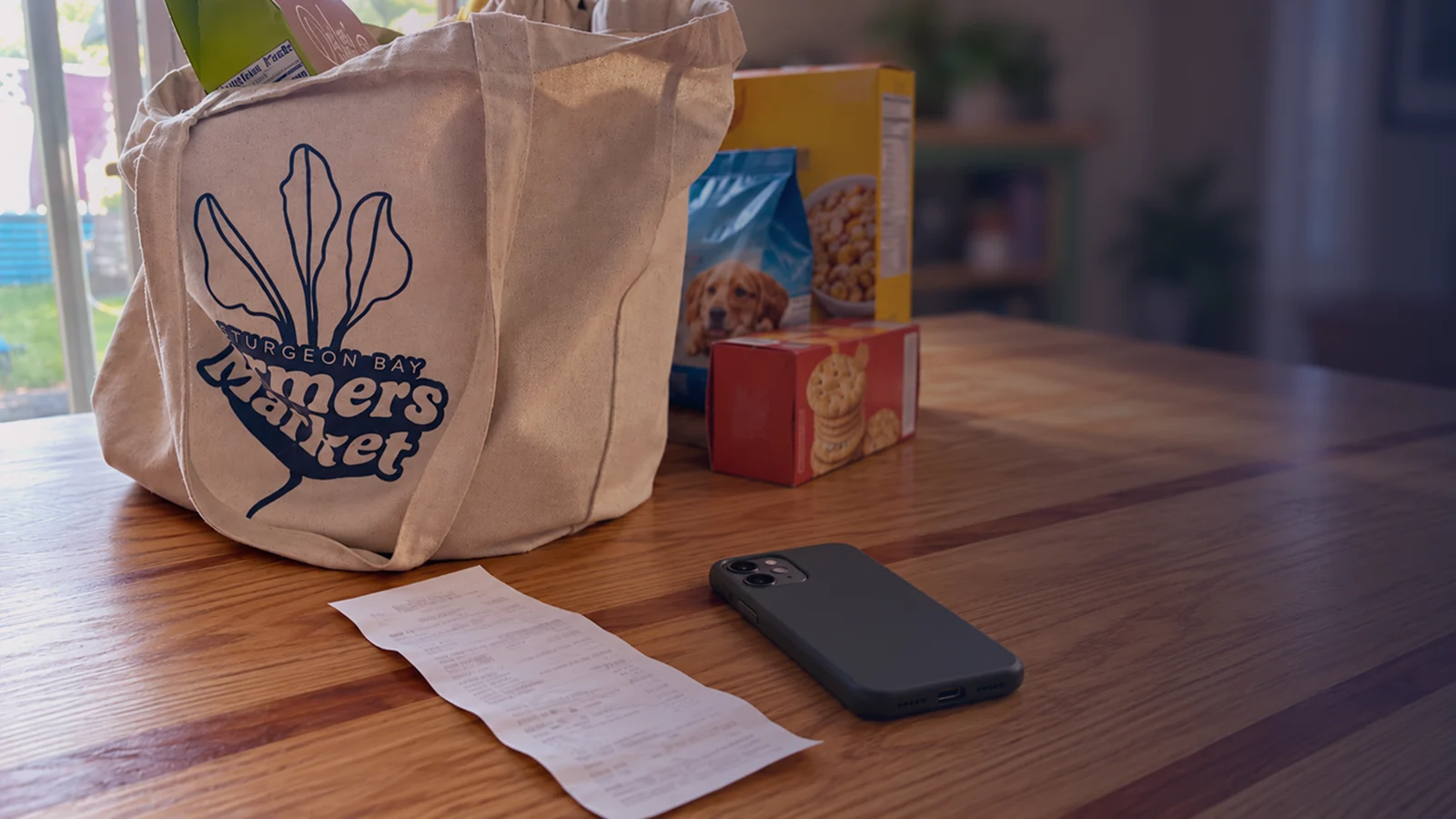
This is one of the reasons receipt scanning is so useful for brands that sell heavily through big-box retail, grocery and other channels where they do not own the checkout experience.
Not because uploading a picture of a receipt is exciting, at least it is not what I would call a fun Friday night activity.
It is because the receipt can give you a lot of really rich information once you know the “who” behind it.
I agree with what the market is saying
There is no shortage of people talking about receipt scanning as a bridge between retail and direct loyalty, and I think a lot of them are right.
I am not interested in inventing some contrarian argument here just so we can say something different. There are a lot of really useful ways to understand retail shoppers today. You have retail media, clean rooms, card-linked offers, retailer loyalty data. All of those can help answer important questions.
But they are all distinct in their own right and they certainly all do different things.
A clean room, for example, can help you understand overlap and measure audiences while keeping identity protected. Retailer loyalty data can give you extremely rich purchase behavior. Card-linked offers can connect transactions to campaigns.
And in many of those models, that is exactly where the relationship is supposed to stay.
With the retailer, with the bank, with the platform.
You may be able to learn from that shopper or reach them through somebody else’s ecosystem, but you do not necessarily end up with that person sitting in your own customer database, ready for you to continue the relationship directly.
Again, I do not mean that as a criticism.
Those tools are doing what they are built to do, and they are doing it quite well. But if what I am trying to build is a direct relationship with someone who bought my product at a retailer, I need a different path.
And that is where receipts become really useful.
Because a receipt gives you more than proof somebody bought something
A receipt obviously tells you the product that was purchased.
But it can also reveal so much more. It can tell you where the purchase happened, when it happened, the transaction total, the individual line items and what else was sitting in the basket.
As a brand, this is so wonderful because now I am challenging assumptions.
Maybe the thing I thought was an occasional purchase is actually being bought every month. Maybe people who buy one of my products consistently buy another category with it. Maybe one region behaves completely differently from another. Maybe the customer I thought I understood based on my own SKU is telling me a very different story when I can see the rest of the basket.
Now I feel unstoppable. Now I really have something to work with!
And if that receipt is connected to a customer already in my database, I can start seeing those patterns over time instead of treating every transaction like it came from a brand-new person.
It is now, “Who is Amanda? Has she bought before? How often? Where does she shop? What is changing? And what should I do differently because of what I know?”
That is where this becomes a loyalty conversation.
There are other ways to identify somebody
This is another place where I think we need to be, let’s say, intellectually honest.
Receipt scanning is not the only mechanism that can result in a brand knowing who bought something. Unique codes can do it. Product registration can do it too.
Coca-Cola ran My Coke Rewards at massive scale using coded packaging. Consumers created accounts and entered codes. It worked for years, but by the time Coca-Cola wound the program down in 2017, the manual code-entry experience was already starting to feel pretty cumbersome compared with how people expected digital experiences to work.1 A code proves a code was entered, but it falls short in proving that someone actually purchased something.
Product registration is even cleaner in some ways. If I buy, say, a brand new Weber Slate Griddle, hint hint, register the serial number and give the manufacturer my information, now they know I own that product. Great.
But nobody is registering a box of crackers. And if that was even a thing, I cannot say I know anyone who would want to register a box of crackers.
That model really only makes sense when warranties, recalls, service and durable goods are involved. It starts making a lot less sense when the product was $4 and is already half gone by the time I get home.
So for fast-moving consumer brands, receipt scanning solves a very practical problem. The customer can identify themselves, the brand can validate that a retail purchase happened, and there is enough information on the receipt to learn quite a bit more than “yes, they bought one.”
But this is the question I would ask before choosing how you do it
When the customer scans the receipt, where does that relationship go?
There are very successful receipt platforms where the consumer creates an account with the platform, uploads receipts to the platform, and continues engaging with the platform.
The brand gets data. The brand may get activation. The brand might get very useful insight.
And that can absolutely be valuable.
But if your goal is to build direct preference, aka loyalty, I would want to understand exactly what I am getting before calling that relationship something I own.
Do yourself a favor and map out the customer journey before you commit. Make sure you understand which model you are buying. If I were back in the seat, I would want to know where the customer profile lives, where the receipt data goes, whether that purchase becomes part of the same profile as ecommerce purchases, surveys, engagement and everything else I know about that person, whether I can continue learning from them, whether I can contact them directly and what happens to that relationship if I stop working with the receipt vendor.
Because for me, the “good” version of receipt scanning is not another file landing in a folder somewhere that I then have to merge into my reporting.
I have lived that version. I do not miss it.
The “good” version is when the receipt goes straight onto the customer record and immediately becomes part of what I know about that person.
Then use it
Say somebody scans their first receipt. Now I know what they bought, where they bought it and when. Wonderful, but I would not immediately celebrate and call the job done.
Maybe the purchase is enough to put them into an initial segment. Maybe I can change the onboarding experience based on what they bought. Maybe I can ask one or two questions that help me understand how they use the product.
And I do mean one or two.
Please do not greet somebody with a 15-question profile survey because you got excited about zero-party data.
You make small talk first.
If I know somebody bought a particular flavor, maybe I ask what other flavors they like. If I know they bought a product that tends to have multiple use cases, maybe I ask how they use it. If they keep engaging over time, maybe I start asking questions that give me more context about their household, lifestyle or preferences.
The receipt told me what they did. Now the customer can start telling me why.
And those two things together can start feeding segmentation, personalization, product decisions, research, lifecycle strategy and customer experience across the business.
That tells me a whole lot more than saying we collected first-party data.
If I were evaluating this for a brand, I would want to know whether receipt scanning can help me answer questions I cannot answer today. Are we driving trial or repeat? Are we actually growing household penetration? How frequently are identified households buying? What else is in the basket? Are retail buyers also interacting with us somewhere else? Do the customers who buy most often look anything like the audience we thought we had? Can we use what they purchased to make the next interaction more useful?
I do not need another technology that creates another dashboard.
I need something that helps me make a better decision.
And because I am first and foremost a consumer, please make the upload experience good
I have a personal grievance here.
I once bought a product in-store and the packaging did a genuinely good job promoting the loyalty program.
Ten points for discoverability, because that is a tough one to get right.
I scanned the code, I understood the value proposition, I signed up while I was still standing in the store. All great.
Then I got home and tried to upload the receipt. This is where it all fell apart.
Click, scroll, find the next button, click again, take the picture, something fails, *screams*, try again.
I kept going because this is literally what I do for a living, but I am nearly 100% positive that a normal person would have put their phone down and chucked the receipt.
Everything that brand did well in the aisle fell apart with the receipt upload experience.
And there is research behind why that first attempt deserves so much attention. In one peer-reviewed study, roughly a fifth of registered participants never submitted anything at all, but of the people who successfully got something in, whether a receipt or a quick manual entry, roughly eight in ten were still participating almost a month later.2 That first experience matters.
Now, I would not use that as some universal commercial benchmark, but the lesson feels pretty practical.
Get them through the first one and give them a reason to do it.
You are asking someone to notice the program, understand the value, sign up, keep the receipt, take the picture and upload it. That is effort. Way more effort than just dropping it in the trash.
So please do not give me ten points toward something I can redeem after fifty more purchases and act surprised when I never do it again. The value has to feel, well, valuable, and it has to show up quickly enough that I can use it.
What works is going to depend on the category and the customer. Maybe it is points, maybe it is money off the next purchase, maybe it is a bounce-back offer, maybe it is access or swag. There is no magical incentive that works for everybody.
Know who you are asking, know what they care about and make the exchange worth it.
Protect the program without punishing the shopper
Anywhere there is value, somebody will try to game the system.
Receipts get duplicated, re-photographed, changed, generated, and now we have AI helping everybody become more creative.
You need rules. Check whether the receipt has already been submitted, check the date, check the products, check the math, check whether the basket or quantity makes any sense.
Flag what looks wrong. But if the receipt is clean and confidence is high, let the person move through the process.
Moderation should be for the weird stuff.
Do not make every honest shopper wait because somebody somewhere figured out how to fake a grocery receipt.
And then actually look at what comes in
This is probably the part I care about most.
Brands ask customers for data all the time, and then it goes somewhere to die.
No. Stop doing that! If you asked me for it, use it.
If receipts start showing an unexpected basket pattern, investigate it. If one region behaves completely differently, figure out why. If your repeat buyers look nothing like the persona in the brand deck, maybe that brand deck needs some work. If customers are telling you more about themselves over time, use that information to make the experience better. You do not have to react to every data point, and you probably should not. But you should be willing to challenge what the business thought it knew against what the customer is actually showing you.
That is why I think the receipt itself gets a little too much attention.
The receipt is how the conversation starts. And don't get me wrong, that is a heck of an important piece of the puzzle. But the real value is that somebody who might otherwise have stayed an anonymous retail transaction can become a customer you recognize, learn from, and build a relationship with over time.
That is why receipt scanning can be such a strong bridge between big-box retail and direct loyalty.
Not because you collected a picture of a receipt. But because you finally have something to build from.
Sources
1. Coca-Cola, “When did My Coke Rewards phase out?”; Marketing Dive, “Coca-Cola plans loyalty program overhaul with a digital focus,” February 2017.
2. Jäckle, A., Burton, J., Couper, M. P., & Lessof, C. (2019). “Participation in a mobile app survey to collect expenditure data as part of a large-scale probability household panel: coverage and participation rates and biases.” Survey Research Methods, 13(1), 23–44.
About the author
Amanda Boshell is a Product Marketing Manager at TrueLoyal. She spent twelve years as a loyalty practitioner before moving to the platform side, across agency, tech, and retail, in roles spanning program operations, strategy, and marketing. She has sat on both sides of the table, as the operator running the program and as the buyer evaluating the platforms.