Is Your Customer Loyalty Program Fraud-Proof?
Customer loyalty programs have become an integral part of modern business strategies, offering brands a powerful tool to engage and retain customers. However, the rise of digital transactions has also led to increased loyalty fraud, posing significant challenges for brands. Over the years, we've seen many prominent brands fall to the clutches of fraudsters.
Armed with sophisticated tactics and technologies, fraudsters exploit vulnerabilities within loyalty programs to deceive businesses and exploit unsuspecting customers. The consequences are dire: financial losses, reputational damage, and disillusioned customers who feel betrayed. As a result, loyalty detection and prevention are of paramount concern for brands in the digital age.
In this blog, we will explore effective loyalty fraud detection and prevention techniques that can help safeguard your loyalty program and protect your customers' interests. So let's dive in!
What is Loyalty Fraud?
Loyalty fraud refers to deceptive activities exploiting loyalty programs for personal gain. Fraudsters employ various tactics such as account takeover, point hacking, and the creation of fake accounts to exploit accumulated rewards or manipulate the system for their benefit.
Loyalty fraud can have far-reaching consequences for brands. Financial losses are an immediate concern as fraudsters redeem fraudulent rewards, affecting the profitability of loyalty programs. However, the impact goes beyond monetary losses. Loyalty fraud erodes customer trust and tarnishes a brand's reputation, which can result in long-term damage to customer relationships and loyalty.
Types of Loyalty Frauds
1. Account Takeover
In this type of fraud, a fraudster gains unauthorized access to a customer's loyalty account. They may accomplish this through phishing, hacking, or social engineering. Once they have control over the account, they can redeem points, transfer them to other accounts, or make unauthorized purchases.
2. Point Theft
Fraudsters may employ various methods to steal loyalty points from customer accounts. They may use stolen login credentials, exploit vulnerabilities in the loyalty program's system, or use brute-force techniques to guess account credentials. Once they gain access, they can transfer points to other accounts or redeem them for rewards.
3. Collusion
Collusion involves multiple parties working together to defraud a loyalty program. This could include employees, customers, or even external individuals. They may engage in activities such as pooling points from multiple accounts to redeem rewards, coordinating fraudulent transactions, or sharing login credentials to access accounts.
4. Fake Accounts
Fraudsters may create fictitious accounts to exploit a loyalty program. They may use fake or stolen identities to register accounts and then manipulate the system to accumulate points or receive rewards. These fake accounts can be used for fraudulent activities, such as reselling rewards or engaging in fraudulent transactions.
5. Coupon Abuse
Loyalty programs often offer coupons or discount codes to customers. Fraudsters may exploit these by using counterfeit or expired coupons, duplicating codes, or sharing them inappropriately. This can result in financial losses for the loyalty program and may undermine the program's integrity.
It's crucial for brands to be aware of these types of fraud and implement robust loyalty fraud prevention and detection measures to safeguard their loyalty programs and protect their customers' accounts.
Effective Loyalty Fraud Detection & Prevention Techniques
To combat loyalty fraud, brands need to implement robust fraud detection techniques. Here are some effective strategies to consider:
1. Implement Multiple Security Factors
Most loyalty fraud start at the login stage. Adding an extra layer of security through multi-factor authentication can significantly reduce the risk of unauthorized access to customer accounts. There are several ways you can implement multifactor authentication in your loyalty program-
Multi-factor authentication —MFAs use OTPs sent to the customers' verified emails or registered mobile numbers to verify the identity of loyalty program members.
Biometrics — You can further enhance program security by allowing customers to log in using facial identity, fingerprints, or voice.
Captcha — Integration Captcha at your login interface can prevent spam bots from accessing customer accounts.
2. Monitor User Behavior Patterns
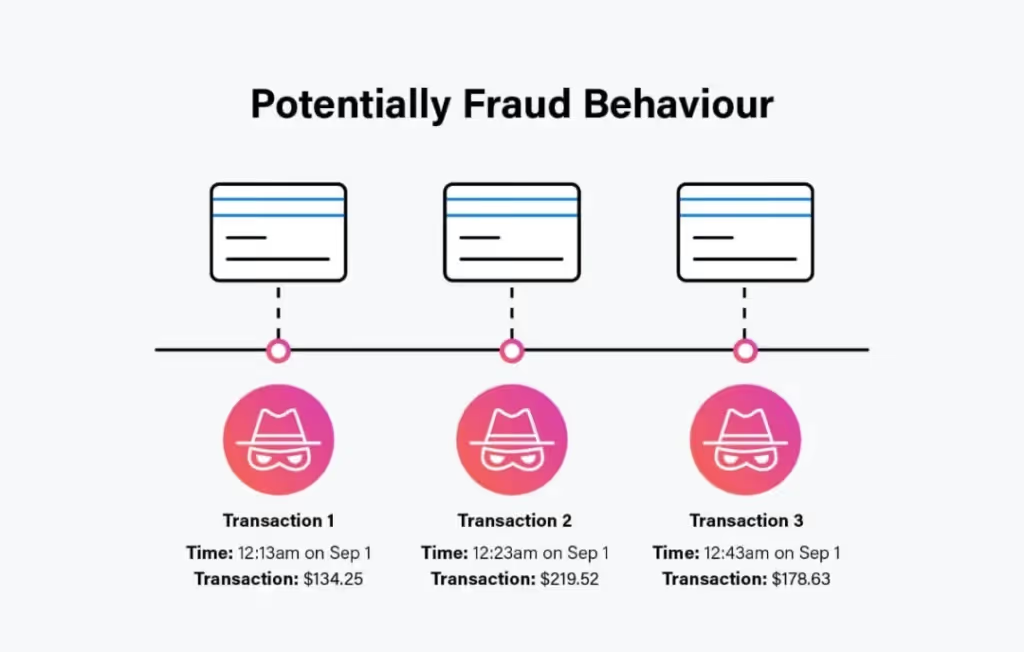
Monitoring user behavior patterns can help identify sudden changes or unusual activities that may indicate fraudulent behavior. It can also identify potential breaches or friendly frauds. This includes analyzing redemption patterns, transaction history, and geographical locations.
Furthermore, you can set up real-time velocity checks to track customer activity. Anomalous behavior can be flagged for further investigation and action.
Here are some ways common red flags in customer behavior that indicate potential loyalty fraud —
- The same customer has switched ISPs multiple times within the past hour.
- Multiple accounts have used the same billing address in continuous transactions.
- A customer has changed birthdays several times.
3. Customer-unique Data Protection
Customer unique data protection refers to the safeguarding of personal information specific to individual customers participating in a loyalty program. It encompasses sensitive data such as names, addresses, contact details, transaction histories, and any other personally identifiable information (PII). Implementing customer-unique data protection involves employing security measures to prevent unauthorized access, use, or disclosure of this information.
Several steps can be taken to implement customer-unique data protection in a loyalty program. First, data encryption should be employed to secure customer data during transmission and storage. Robust encryption algorithms and secure communication protocols ensure that the data remains unreadable to unauthorized parties. Additionally, access controls should be implemented to restrict access to customer data only to authorized personnel. This can include strong passwords, two-factor authentication, and role-based access control.
4. Regularly Audit Loyalty Programs
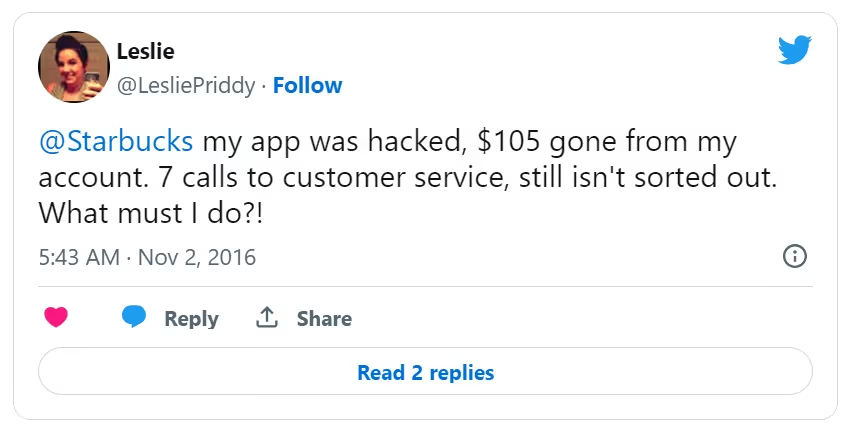
More than 72% of loyalty program experience loyalty fraud. And many times, these frauds are a result of suspicious customer activity. For example, hackers stole millions of dollars from Starbucks Rewards members using their loyalty cards. The hackers utilized the auto-reload function of the card to make continuous transactions without even needing to know the customer's credit card information.
That is why performing regular audits of loyalty programs and transaction logs is crucial to detecting discrepancies or suspicious activities. By reviewing and analyzing data, brands can identify irregularities, such as excessive point accumulation or redemption patterns, and take appropriate action to prevent further fraud.
5. Invest in Data Analytics for Breach Detection
Data breaches are among the most common and challenging loyalty frauds. A loyalty program may have millions of members. Imagine if the personal information of these members got leaked.
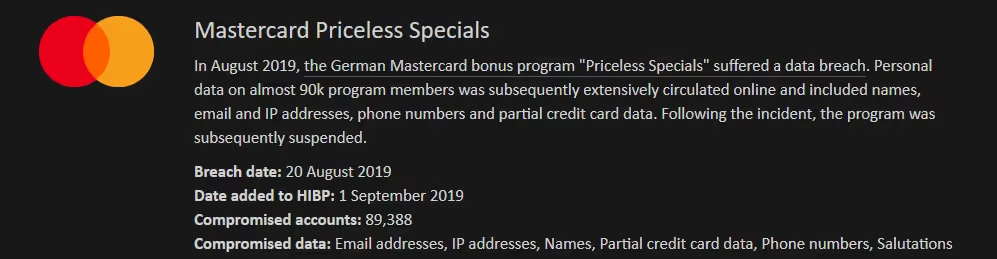
That is what happened with Mastercard. A cyber-attack affected around 90,000 German consumers who participated in Mastercard's Priceless Specials rewards program. The attackers leaked personal information, including the affected members' names, addresses, and credit card numbers.
That is why data analysis plays a vital role in detecting loyalty fraud. By leveraging big data analytics, brands can identify patterns and anomalies associated with fraudulent activities. In addition, brands can use advanced machine learning algorithms to process large volumes of customer data and generate real-time alerts when suspicious behavior is detected. Continuous analysis and improvement are essential to stay one step ahead of fraudsters who constantly evolve their tactics.
6. Educating Customers on Fraud Prevention
While implementing robust fraud detection measures is essential, educating customers about loyalty fraud prevention is equally important. Brands should provide security tips to customers, encouraging them to use strong passwords, regularly update their account credentials, and be vigilant about their account activities. By raising awareness and empowering customers with knowledge, brands can create a united front against loyalty fraud.
Furthermore, brands should enable multi-factor authentication and monitor customer activity at every stage to detect anomalies in customer behavior.
Conclusion
In today's digital landscape, customers are increasingly vigilant about their privacy and the security of their personal data. They expect brands to prioritize protecting their information, especially when participating in loyalty programs. Brands must recognize this heightened awareness and take proactive measures to detect and prevent loyalty fraud.
Failure to protect customer data and address loyalty program fraud can have severe consequences for a brand. Customers who experience breaches or unauthorized access to their information may lose faith in the brand's commitment to their privacy. This loss of trust can lead to a decline in customer loyalty, reduced engagement, and even negative word-of-mouth.
Loyalty fraud poses a significant threat to brands and their loyalty programs. By implementing effective fraud detection techniques, leveraging data analysis for loyalty programs, educating customers, and staying updated with evolving trends, brands can detect and prevent loyalty fraud. Safeguarding the integrity of loyalty programs not only protects financial interests but also preserves customer trust and loyalty.