How Social Listening Builds Brand Trust

Are you creating a brand experience your customers will talk about?
Your customers are talking to their friends, family, colleagues, and followers about the brands they love. The question is: have you been able to put your brand into that conversation?
This sounds a lot easier than it is. How do you get people who you've never met before to trust your brand enough to recommend it to the people in their lives?
The secret you're looking for is social listening.
Social listening has become increasingly more well-known as a marketing strategy that can grow your audience and increase sales. But, why does it have that power?
It gives brands the opportunity to shift and adapt their marketing and products as their customers ask. And as we know, the customer is the most important person in your business.
Here's how you can use social listening to build brand trust.
What is social listening?
If you could be a fly on the wall as your customers talked about your brand to their friends and family, how quickly would you invest in this new fly spy technology?
We'd have those flies all over town bringing in the feedback that we could use to content, copy, branding, and products. The beauty of marketing in 2021 is that we all have access to this fly spy technology.
And it's staring at you right now.
The screen you're reading this article on can give you access to how your customers talk about your brand when you're not there. Your customers have talked about you using hashtags, Instagram tags, TikToks, YouTube videos, tweets, and more.
Social listening is your strategy to get in on the conversation. With social listening you can read, watch, and listen to customer feedback from your audience and customers to see where you can improve your marketing and products.
Why is social listening important?
When you're having a conversation with a friend you want to feel seen, heard, and understood. Consumers want the same experience from the brands they're creating relationships with. That's why social listening matters.
Brands are used to changing creatives to avoid ad fatigue, but with social media we can also use customer feedback to create better content. Your prospects and customers are telling you what they want (and even making it for you in the case of UGC), but brands have to listen to hear them.
How can brands listen to their customers?
By looking and asking for feedback. Ivonne Aldaz, Marketing Specialist and Strategist at TrueLoyal explains why hashtags, just one way to collect social listening, are integral for brands in 2021.

It's a marketer's job to build a relationship with their customer avatar and these relationships need to start with trust.
How can social listening help brands build trust internally and externally?
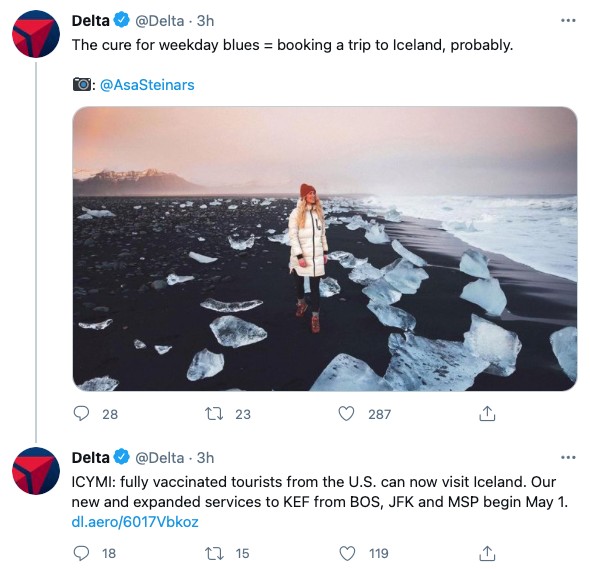
Brands are using social listening to create a better brand experience both online and offline. Take Delta, who reposts travel content to their social media (always giving the photographer credit), and uses this content to inspire their following of passionate travelers.
In our State of User-Generated Content Report in 2020 we found 75% of respondents claim that UGC makes content more authentic. With user-generated content, Delta is able to show social proof that others are traveling and it's okay for their audience to lean into their travel bug.
Take a look at their second tweet, though.
Here is where Delta takes their trust building a step further by letting their audience know if they're allowed to fly into Iceland or not.
When brands create positive and streamlined experiences, their customers and team are more likely to tell their friends or create UGC about the brand. That's the social proof brand's need to capture attention and regain consumer confidence.
And it's exactly why user-generated content and employee-generated content play such a huge role in social listening.
What role do user-generated content and employee-generated content play in social listening?
User-generated content (UGC) continuously proves more successful than branded or stock content thanks to social proof. Social proof is a psychological and social phenomenon where people mirror the actions of others to feel like they belong. It's part of our instincts to stay with the pack where we'll be safest from potential threats.
While we used this instinct in the past to save ourselves from dangerous animals sharing our environment with us, we still succumb to the need to belong in the modern age (our brains haven't quite caught up yet).
When customers and employees share their feedback and experiences online, they're telling brands exactly what they value in that relationship.
A great example comes from Dove user-generated content. We searched “sustainability” on TikTok (assuming it'd be a hot topic on #EarthDay), and noticed a user raving about Dove's latest refillable deodorant.

This video is a blinking neon sign to Dove: your customers care about the sustainability of your products. Do more of that and they'll trust your brand to have aligned values to theirs.
Employee-generated content has the same social listening power. Employees sharing how much they're enjoying a hybrid work model on social, where they can work from home some days and go to the office others, tells their company what their employees value in their work time. That company can use this hybrid work model when recruiting new employees now that they know these prospects want to work at a company whose values they can trust align with theirs.
If you're feeling empty handed about the lack of feedback you have from customers and employees, we have plenty of suggestions as to how you can get started with social listening.
How do you “do” social listening?
When was the last time you asked your audience for feedback?
We're not here to judge you if you realize that it's been way too long. We're here to remind you that asking for feedback is an important part of receiving it.
Market research can give you a fresh perspective of your company's strengths, weaknesses, threats, and opportunities. Once you understand how your customers, fans, and employees perceive your brand, you can position your message to play on your brand's strengths (and make room to improve on your weaknesses).
Asking for feedback is standard, but UGC and social listening can accelerate the feedback loop without having to design and launch a formal feedback program.
Here are a few ideas to collect feedback (or UGC) in a way that feels more authentic (and less like a sales pitch):
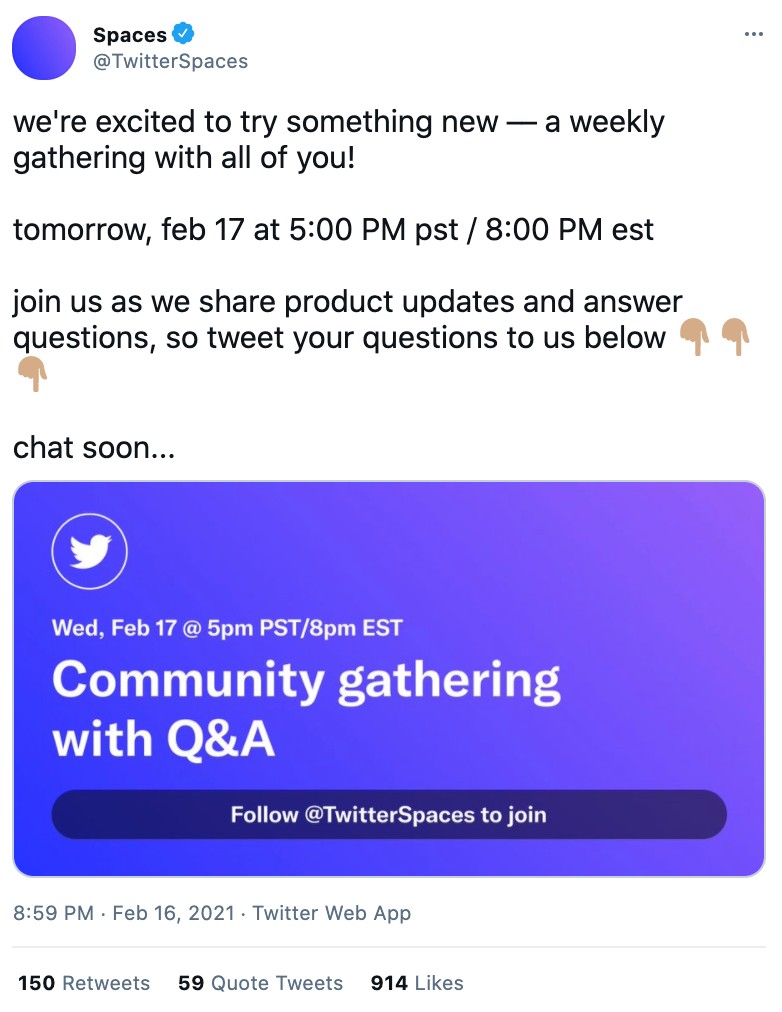
Twitter Spaces hosted its first community Q&A, where they shared product updates and answered questions from the audience:
MyMind, a Pinterest-like start-up, asked users to submit testimonials for its website via tweet (it was a clear ask with a simple way to submit content without extra steps).

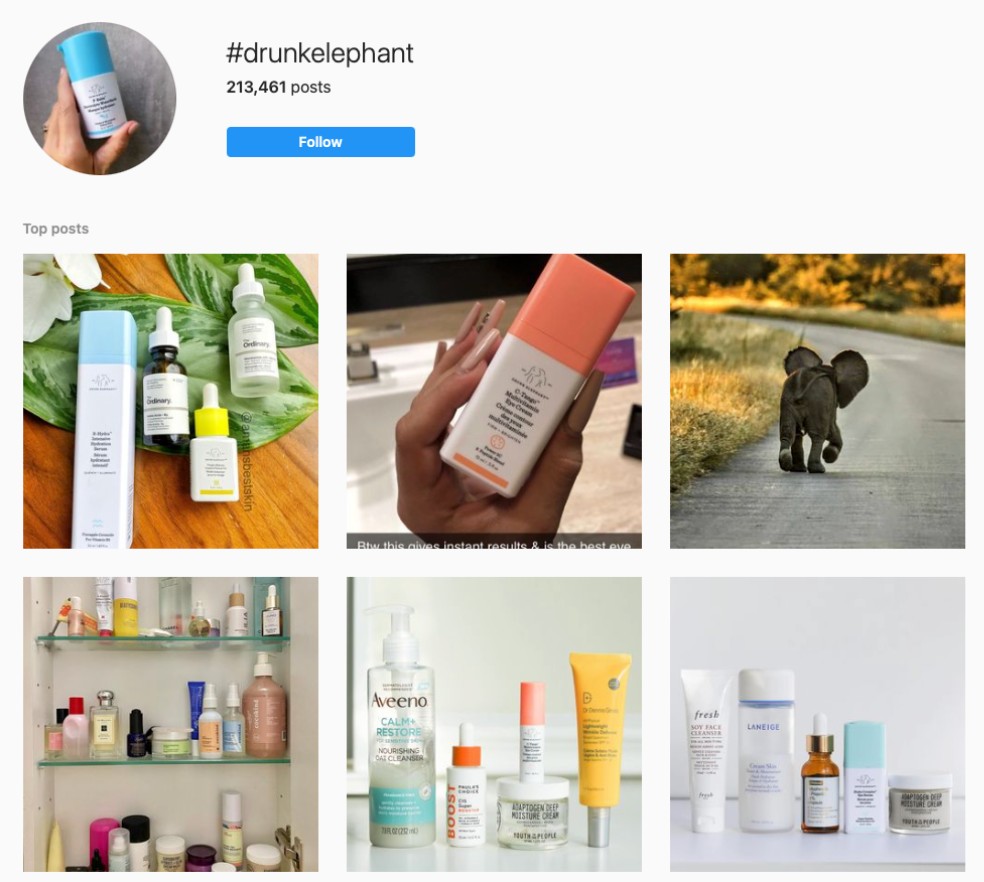
Search a relevant hashtag for a product or trending topic and see what users are sharing:
You can also try asking your top customers for their insights, whether that's a video of them unboxing your product, a quote for an article, or thoughts on your latest features.
Collecting feedback not only gives you a reason to build community and engage your audience, but it can also help strengthen the perception people have of your brand.
Not to mention, paying attention to micro-moments and social sentiment can quickly alert you of audience behaviors and feelings (in real time), so you can adjust, respond, and be more connected.
Here are some examples of UGC you can experiment with:
- Customer stories
- Q&As
- Polls
- Testimonials
- Giveaways
- Contests
- Unboxing videos (if applicable)
Before we send you off to start reading feedback about your brand online, just remember. Fifty-percent of consumers wish brands would tell them what type of content to create and share.
This just adds to the brand experience your customers would love to have with your company. The type of experience that makes them tell their friends, family, colleagues, and followers about your products.
And it all comes down to listening to your audience and customers to hear what they want you to change or never change.
That's how social listening builds relationships between brands and customers – and creates trust.
Want to connect more authentically with your audience? Subscribe to Future of Marketing for weekly insights and strategies.