The Good, The Bad and The Ugly: Why Emojis Are Taking Over the World

How many times have you sent a thumbs up as a response to a question or a smiley face to a friend in a message?
If the answer is many, you might just be fluent in the fastest growing language.
And no, it's not a spoken language. It's not Arabic, or Mandarin, it's actually the language of Emojis - those little icons you can slip into messages.
In fact, the language of Emojis is evolving faster than any other ancient form of communication, including hieroglyphics. “As a visual language emoji has already far eclipsed hieroglyphics, its ancient Egyptian precursor which took centuries to develop,” says Professor Vyv Evans.
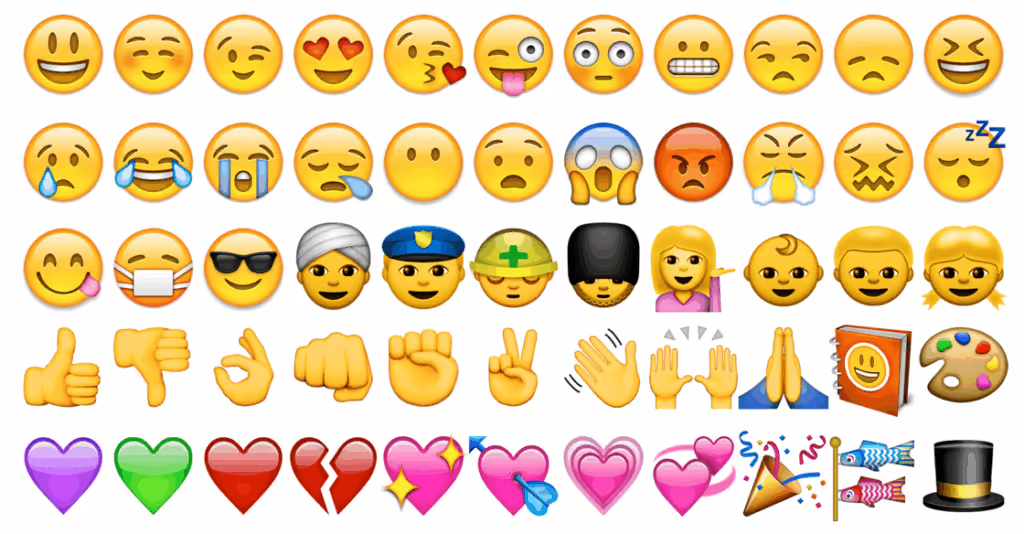
It might come as a surprise (cue shocked emoji face here), but a whopping 72% of UK citizens aged between 18 and 25 find it easier to communicate emotions using emojis rather than text.
But it's not just the younger generation that are replacing icons with words: Andy Murray documented his wedding day by Tweeting about it totally in emojis and, more tellingly, the Oxford English Dictionary made Emoji the Word of the Year in 2015.

This doesn't take into account all the brands that have launched campaigns revolving around emojis, but we'll talk about that in a bit.
For now, let's take it back a few years to see where the excitement about a new, modern image-based language came from (because, let's face it, it kind of seemed like it came out of nowhere, right?).
What is An Emoji?
First things first, what does the word emoji actually mean?
It's directly translated from Japanese, where the “e” means “picture” and “moji” means “character”. Today, with the rise of global communication through the interconnected interwebs, emojis gives us the chance to connect with each other in a language we all understand.
A Brief History of the Emoji
It might seem like the emoji popped up just a few years ago, and that's because it did in its latest form.
In fact, emojis as we know them today really blew up in 2012 when Apple released their iOS 6 model and owners suddenly found themselves with an entire keyboard of images at their fingertips. Their huge success meant they were then implemented on Instagram, Facebook, Twitter, and more, so that even more people could share and communicate using this new language.
Mental Floss have put together a great piece on the history of the emoji as part of their Big Questions series:
https://www.youtube.com/watch?v=4-356JzuXUY
Now, you're probably thinking, “I'm sure I used to used emojis of some kind in my MSN days”, or maybe you remember sending them to your friends on your very first smartphone pre-2012.
And you'd be absolutely right for thinking that.
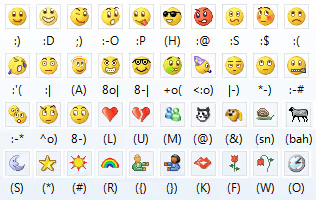
Remember these from the days of MSN?
In fact, emojis originally began as emoticons, which are essentially facial expressions made out of different types of punctuation - you know, the colon and a close bracket makes a :)
This type of pictorial communication was the grandfather of emojis and actually dates back to 1881 when they were first published in Puck Magazine. Which, if your maths isn't so quick, makes them more than 100 years old.
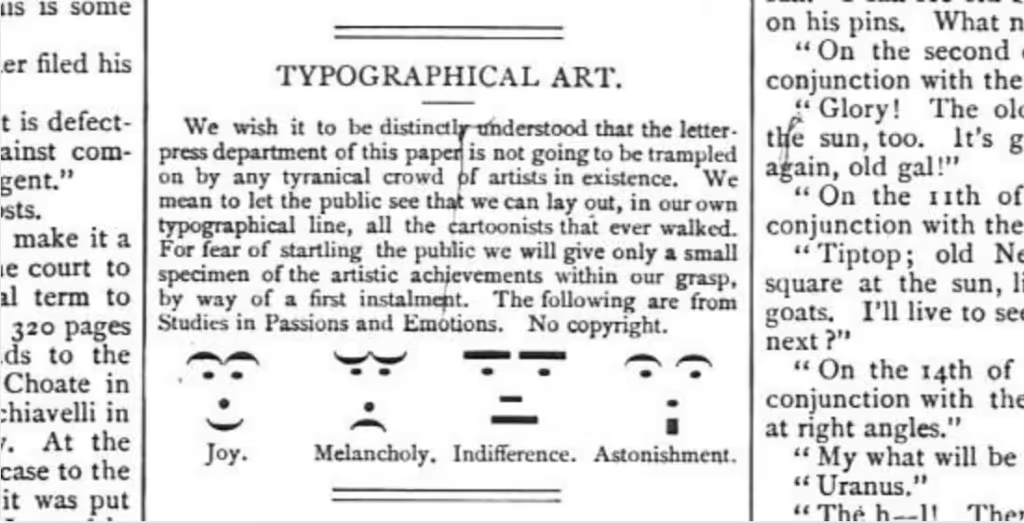
It wasn't until 1982 (a century after their first appearance) that emoticons were added to computer language which evolved quickly after the turn of the millennium.
So what might seem like a new form of communication has actually been a language in the making for more than 100 years.
Let's dig into how brands are using this new language to communicate with their audiences.
Social Media Storytelling Using Emojis
I mentioned earlier that emojis have become a huge part of social media platforms, particularly Facebook, Twitter, and Instagram. This means brands have a totally new (and incredibly modern) way to communicate with their fans.
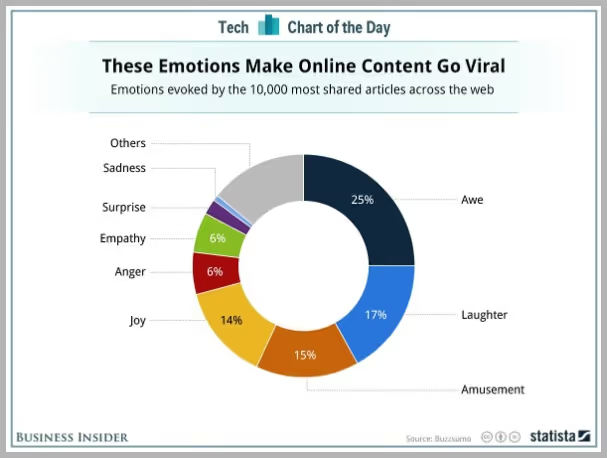
And, when you consider that in order to really make an impact, marketing needs to tap into emotions, using emojis seems like the perfect answer - especially since a large portion of the population can actually express themselves better with images.
Here are some key examples of how emojis have been used to created engagement and connectivity.
Social Media Storytelling Using Emojis
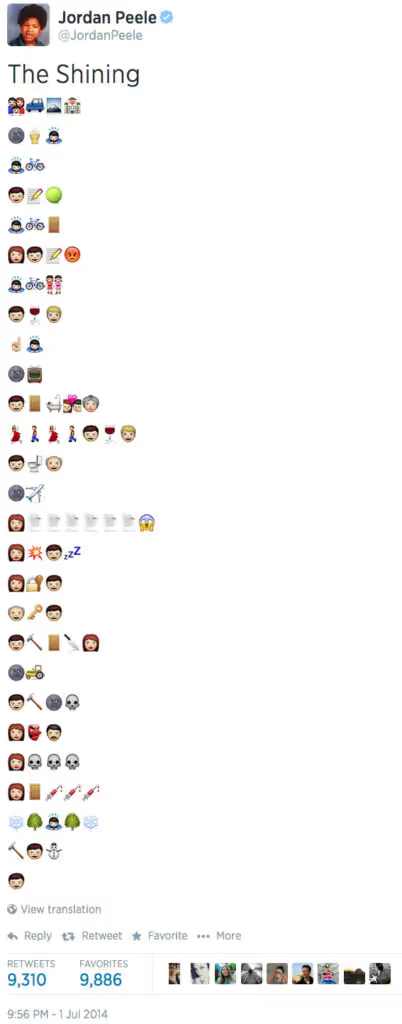
- The Shining as told through emojis
Actor and comedian Jordan Peele managed to recreate an entire movie using emojis just to prove how versatile this new language really is.
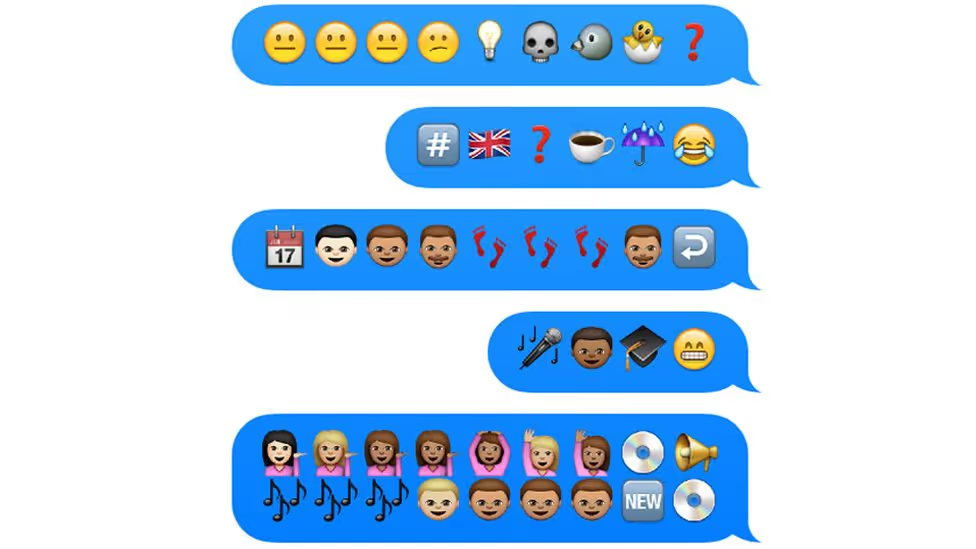
- Emoji headlines from the BBC
Usually a prim and proper bearer of the news, the BBC spiced things up by recreating some of their top headlines in emoji format. Can you understand any of them?
- McDonald's Print Ads
McDonalds took the emoji language to a whole new level when they created a series of print ads that used the icons.

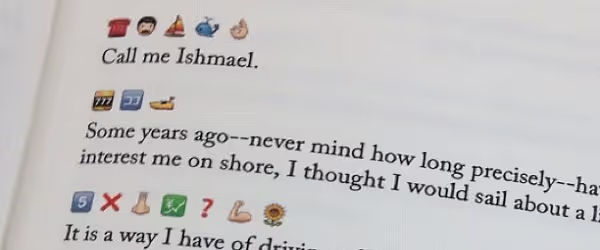
The trend has really caught on. There's even a version of Moby Dick written entirely in the emoji language called, quite aptly, Emoji Dick.
So Why Have Emojis Taken Off in the Online World?
- Emojis Help Brands Communicate
In an age where consumers are no longer the passive receptacles they used to be, brands have to try that little bit harder to engage them and communicate with them.
Consumers are dictating the rules and brands constantly have to find the middle ground between what they want to say and what their audience want to hear.
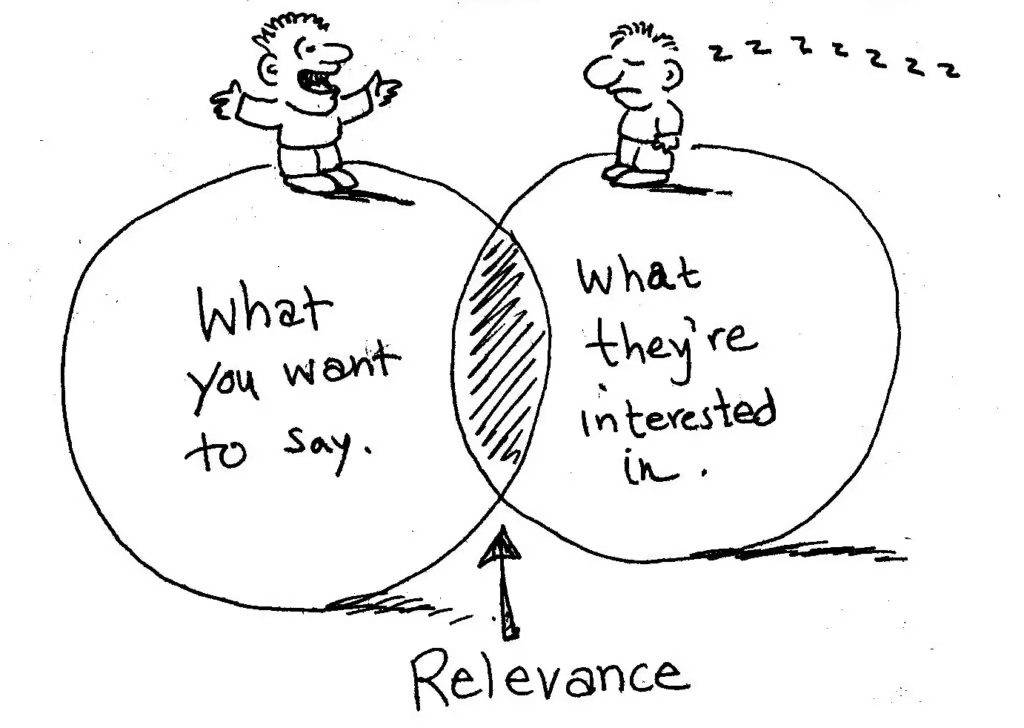
By using emojis, the fastest growing language in the world, brands can communicate with their audiences in a way that's comfortable and expected. What's more, they can reach those tricky-to-engage demographics like the ever-growing group of millennials.
- Emojis Offer a Quick and Easy Way to Stand Out
In this piece on FastCo, Karl Heiselman says that “brands are defined by the experiences they create and curate. Better experiences help businesses attract new customers, keep them for longer, and stretch into new areas to create value for them.”
And, with consumer attention spans dropping rapidly by the day (we're now at around eight seconds - less than a goldfish), it's important to create those experiences quickly.
Emojis offer a quick and eye-catching way to present a message, helping brands stand out in market places that are becoming increasingly saturated.
- Emojis Are a Global Storytelling Language
The internet doesn't have borders.
Brands can tap into networks all over the world and market their business to people from all four corners of the globe.
But there's still the language barrier, right? Well, wrong. Emojis are essentially languageless or, on the flipside, are a universal language.
This fluid way of communicating means it's much easier for brands to tell stories all around the world (and it's all about storytelling, if you didn't know already - in fact, 80% of people want brands to actively tell stories).
Emojis: The Good and The Bad
The arrival of a new language always draws some controversy - are we trying to move forward to quickly? What will it bring to the world and its many cultures?
But it also shows just how much progress we are making with the emergence of the online world (even since the emojis came out in their current form in 2012 there has been so much evolution).
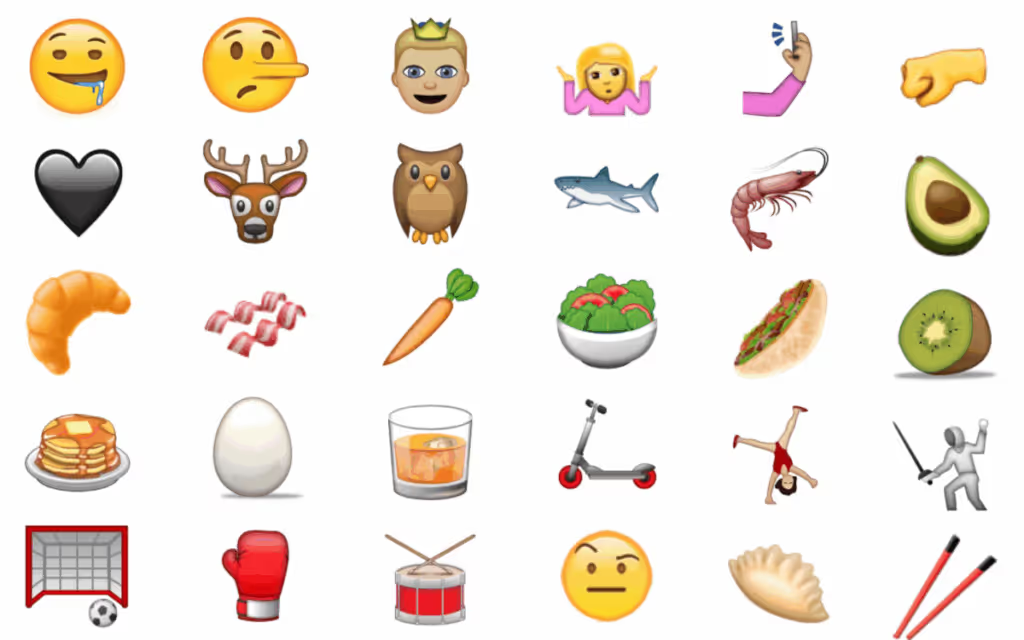
Some of the new emojis in the latest 2017 batch.
So is this new, fast-growing image-based language a good thing or a bad thing?
The Bad: A Step Backwards
After Professor Vyv Evans gave his talk on the BBC, Jonathan Jones answered with a pretty brutal blog post in the Guardian about how emojis is a sign of the degeneration of modern culture.
Sure, hieroglyphics are considered to be this age-old heritage that tells us so much about history, but what about emojis? After coming this far, are we about to take ten steps back?
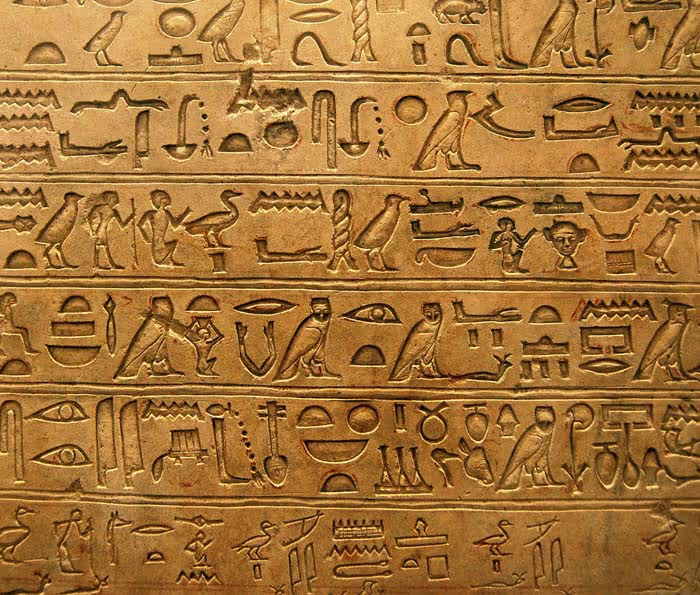
“After millennia of painful improvement, from illiteracy to Shakespeare and beyond, humanity is rushing to through it all away,” says Jones. “We're heading back to the ancient Egyptian times, next stop the stone age.”
But do the benefits of emojis outweigh this?
The Good: The Chance to Communicate in a New, Exciting Way
Since emojis were launched, people from all generations have hopped on the bandwagon sending smileys, thumbs up and little pictures of sushi to their friends - surely that counts for something?
Almost immediately, cross-generations and people from different parts of the world could communicate with each other in “a language that transcends culture”.
Not only can friends who speak different languages better understand each other, but brands can create connections with audiences they might never have had access to before.
What's Next For the Emoji?
Could emojis become the language of the future?
According to Disk Cactus, that could be the case. The company launched a kickstarter campaign that landed $20,000 in funding to produce a special keyboard overlay that turns your average Apple computer into an emoji-producing machine.
In the future, could we see everyone using emojis to communicate?
Will the keyboards we know and love now become something else entirely?
Who knows, especially with the pace that this new language is growing. It took thousands of years for hieroglyphics to evolve, but it's taken just five years for emojis to take over the world.
So basically, anything could happen.