How to Solve Low B2B Customer Retention with the Right Loyalty Platform

B2B retention fell to 29% in 2025 due to poor onboarding, misaligned value, and fragmented experiences; adopting a purpose-built B2B loyalty platform with system integrations and AI personalization can turn transactions into engaging relationships and prevent churn.
Understand Key Drivers of Low B2B Customer Retention
B2B retention differs from consumer markets because of longer sales cycles, multiple stakeholders, and complex purchasing relationships. Common retention failures are weak onboarding that doesn’t deliver immediate value, insufficient ongoing engagement, and offerings that fail to evolve with customer needs.
Collect systematic feedback with Net Promoter Score (NPS) surveys and complement numeric trends with direct customer interviews to learn why clients stay or leave. Use a diagnostic framework that maps obstacles to measurement techniques:
- Poor onboarding: Track time-to-value and early engagement
- Lack of perceived value: Monitor usage and feature adoption
- Insufficient communication: Analyze response rates across touchpoints
- Misaligned offerings: Review renewals and expansion signals
- Competitive pressure: Run win/loss analysis and positioning reviews
This targeted approach exposes root causes so your loyalty investment solves retention, not symptoms.
Choose a Loyalty Platform Built for B2B Complexity

Consumer loyalty tools often fail in B2B because they can't handle multi-tier contracts, account pricing, or approval workflows. B2B programs require reward structures that reflect business value and purchasing patterns rather than simple point-and-redeem systems.
When evaluating vendors, prioritize platforms that scale across omnichannel touchpoints, support extended buying cycles, and enable advanced segmentation. A true B2B loyalty platform manages, automates, and analyzes reward programs for business clients—supporting sales teams, channel partners, and end customers through relationship-focused tools.
Ensure the platform integrates with your existing tech stack and can adapt as you grow. It must support variable contract terms, multi-stakeholder approvals, and complex attribution models typical of B2B.
Essential Features for B2B Loyalty Platforms
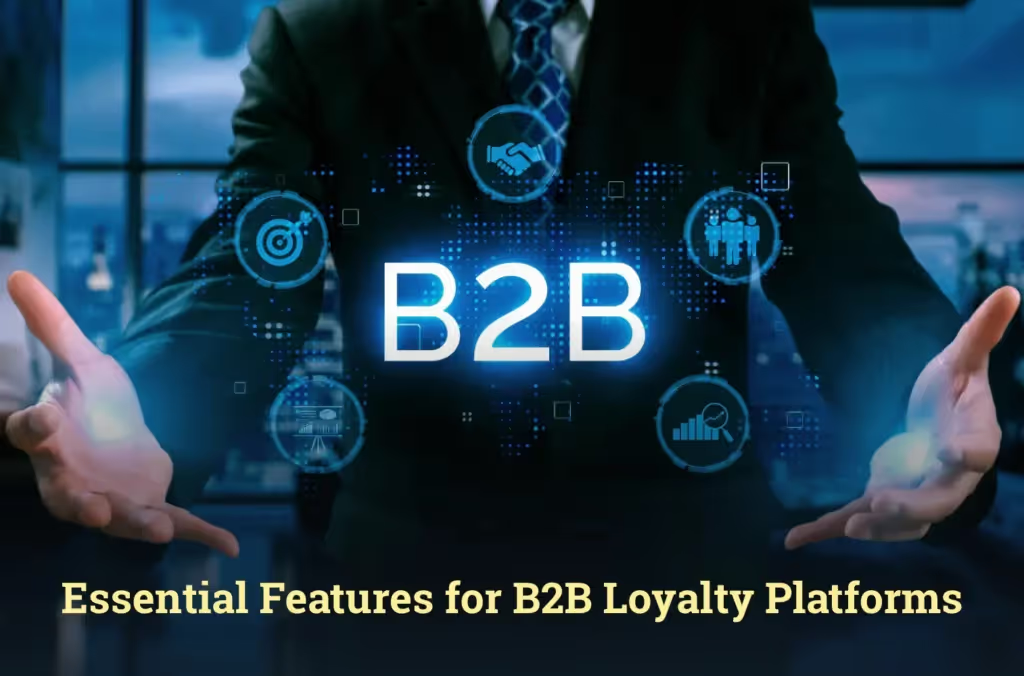
Successful B2B platforms deliver capabilities addressing business buyers and program administrators. Key features preferred by loyalty leaders include tier management, customizable rewards, integrations, analytics, automation, and flexible segmentation.
FeatureDescriptionValue for B2BTier ManagementStatus-based or contract-value tiersDrives larger deals and longer commitmentsCustom Reward StructuresBusiness-relevant incentives beyond pointsBoosts engagement with relevant benefitsAnalytics/ReportingCLV, churn, AOV, and BI dashboardsDemonstrates ROI and informs strategyIntegration CapabilitiesCRM, POS, ERP connectivityUnifies data and workflowsAutomated WorkflowsTriggered communications and rewardsReduces manual work and increases consistencyAdvanced SegmentationBehavioral and firmographic groupsEnables personalized experiences at scale
These features form a loyalty ecosystem that supports complex B2B relationships and continuous optimization. CRM integration is especially critical for real-time synchronization and alignment with sales and service processes.
Integration with CRM, POS, and Analytics Systems
Loyalty integrations create a unified customer view and eliminate data silos. Real-time data exchange between your loyalty platform, CRM, POS, and analytics tools ensures all interactions reflect the full relationship history and current context.
Integration benefits include automated data flows, fewer manual errors, and accessible loyalty insights for sales and marketing. To vet vendors, inventory your tech stack, document API and data-exchange needs (real-time vs batch), and confirm vendor compatibility and support commitments for ongoing integration maintenance.
Design Loyalty Programs Aligned with B2B Customer Behavior
B2B loyalty must match longer decision cycles, team-based buying, and value-driven purchases. Instead of rewarding frequent small transactions, design programs that reward relationship depth, contract growth, and strategic behaviors that deliver long-term value.
Start with segmentation by annual order volume, purchase frequency, contract size, or multi-touch engagement. Volume-based and behavior-aligned rewards raise retention and average spend—examples include Salesforce and Toolstream programs.
Order-volume incentives align costs with customer value and encourage bulk orders and repeat business, motivating purchasing behaviors that improve profitability and efficiency.
Tiered Rewards and Volume-Based Incentives
Tiered loyalty systems provide clear value progression, motivating customers to increase engagement and spend. Effective tier structures segment by spend, frequency, or tenure and offer escalating benefits.
A simple three-tier model (Silver, Gold, Platinum) might map to annual purchase volume or tenure: Silver offers standard discounts and basic support; Gold adds priority service and selective access; Platinum includes dedicated account management and custom pricing. Each tier must deliver business value exceeding its cost.
Combining tiers with volume incentives compounds motivation: customers gain better benefits as order size and total spend grow, rewarding consistency and expansion.
Gamification and Engagement Strategies
Gamification in loyalty programs makes routine transactions more engaging without heavy admin. Game mechanics. points, badges, leaderboards, challenges, and milestones—tap competitive and achievement motives even in professional contexts. Proven approaches include challenge-based points, leaderboards for segments, and milestone unlocks tied to exclusive access or benefits; IBM’s VIP Rewards blends digital mechanics with tangible business benefits.
Add educational rewards or exclusive access for professional development to deepen relationships and position your company as a strategic partner rather than a vendor.
Leverage AI for Personalization and Predictive Insights
AI enables fine-grained segmentation, predictive churn modeling, and automated personalized offers at scale. Machine learning algorithms detect behavioral patterns humans might miss and enable proactive interventions.
AI-driven programs can generate substantial ROI: platforms using advanced analytics, such as TrueLoyal, report churn reductions of 26.4% and up to 40x ROI versus static programs. AI matches messages and offers to customers at optimal moments in their business cycles.
An AI-powered loyalty platform collects data, analyzes patterns, predicts retention risks, and triggers personalized engagements automatically, with continuous measurement and optimization based on results.
Implement Continuous Monitoring and Adaptation
Loyalty programs require ongoing management: customer needs, competitors, and priorities change, so programs must adapt. Regular tracking of KPIs, CLV, churn, purchase frequency, and AOV, enables data-driven optimization.
Run monthly or quarterly performance reviews aligned to your business cycle to evaluate KPIs and identify enhancements. Build a metrics dashboard combining leading indicators (predictive signals) and lagging indicators (outcomes) for proactive and retrospective analysis.
Track Retention Metrics and Customer Lifetime Value
Customer Lifetime Value (CLV) estimates total revenue from a customer and is central to evaluating loyalty ROI; include direct revenue, referral value, upsell potential, and acquisition savings from retention. Churn rate signals customer loss—track both full terminations and volume reductions, since gradual disengagement often precedes churn.
Average Order Value (AOV) indicates purchase behavior shifts. Gross retention measures customers retained; net retention adds expansion revenue and can exceed 100% when existing customers grow spending. B2B leaders with higher retention typically achieve twice the growth of lower-retention peers, underscoring retention’s strategic value.
Use Customer Feedback to Refine Program
Active feedback closes the loop: collect NPS, post-interaction, and program-satisfaction responses, then act and communicate changes. Closing the feedback loop can boost retention by 8.5%.
Implement a workflow: gather feedback across channels, analyze by segment to find patterns, update program elements, and communicate changes to participants to build trust and show responsiveness.
Build Trust and Deepen Customer Engagement

Trust is the foundation of B2B loyalty, 88% of customers who trust a brand return as repeat buyers—so technology alone won’t secure loyalty. Maintain consistent branding, service quality, and communications across touchpoints to reinforce reliability.
Adopt omnichannel loyalty to meet customers on their preferred channels and ensure seamless experiences. Offer high-impact, low-cost rewards—professional education, exclusive insights, or early access—to position your company as a strategic partner and create emotional ties that reduce price-driven churn.
Frequently Asked Questions
What causes low B2B customer retention and how can it be identified?
Low retention usually stems from poor onboarding, inadequate engagement, and product/service misalignment; identify causes with regular NPS surveys, usage and adoption metrics, and exit interviews, plus tracking time-to-value and support ticket trends.
How can a loyalty platform improve B2B customer retention?
A B2B loyalty platform automates personalized rewards, creates systematic engagement between purchase cycles, centralizes interaction data for timely outreach, and—when AI-enabled—predicts churn to trigger proactive retention actions.
What key features should a B2B loyalty platform have?
Key features include tiered rewards, CRM integration, advanced analytics for CLV and ROI, automation for triggered communications and rewards, support for complex approval workflows, flexible segmentation, and customizable business-focused reward catalogs.
How do you personalize loyalty programs for B2B customers?
Personalize by segmenting on purchase behavior, company size, industry, and engagement; tailor rewards, channels, and cadence accordingly, and use AI to adjust offers and timing based on predicted preferences and optimal engagement windows.
How is the success of a B2B loyalty program measured?
Measure success via retention metrics (churn reduction, CLV growth, repeat purchase frequency), participation and redemption rates, referral generation, and incremental revenue attributed to the program to calculate ROI and refine program elements.