How Can Brands Collect First-Party Data Effectively in Loyalty Programs?
Every brand gathers user data and puts it to work with artificial intelligence & machine learning. The web generates a humongous amount of data each second. Since data is at the core of digital growth, the quality of data holds prime importance. Generally, there are numerous ways to get access to user data.
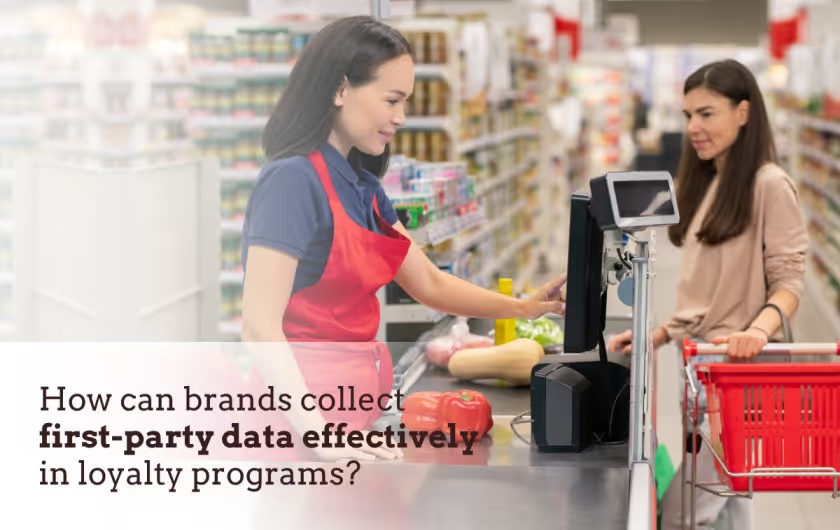
Data is classified as first-party data, second-party data, and third-party data. Out of these three, first-party data holds prime importance because it's accumulated directly from the end-user. Brands with physical stores worldwide have several customers coming every day. Collecting data from those users can significantly improve the brand's understanding of customers. Moreover, the first-party data can substantially improve the performance of loyalty programs.
No matter how advanced the data collection system gets, brands that still have the higher engagement offline need to work on collecting first-party data directly from the user.
Importance of First-Party Data
According to MarketingDive, 88% of marketing experts agree that collecting first-party data is a priority. First-party data has its unique value. Third-party data are sometimes not authentic and lead to misalignment from users' actual data. Pandemic has pushed brands to deploy a multi-channel data collection and unification strategy.
But when it comes to collecting first-party data, there are not many ways available. Due to this, many brands are missing a valuable pie in their data acquisition strategy. Two possible methods of collecting first-party data in recent times in a loyalty program are receipt scanning feature & code exchange feature.
Let's understand how both the features work.
1. Receipt Scanning
Brands that do well offline and sell through multiple distribution channels do not have a direct connection with their customers. Unlike online stores, it gets challenging to keep track of every customer and their details to reach them for feedback and reviews. This is when receipt scanning comes to the rescue and enables the brand with first-party data collection.
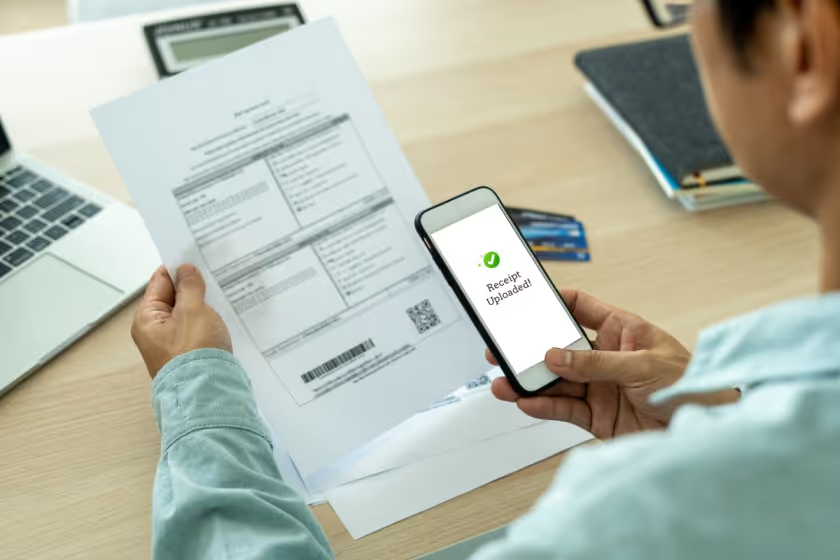
When customers buy a product, they get a receipt for the same transaction. The receipt has unique information about the product, user details, and more. By asking users to scan the receipt and upload it to the website, brands can gain access to this data. Generally, brands reward users for scanning and uploading. These reward points encourage users to continue scanning the receipts.
Once the direct connection between customer and brand is established, the brand has access to valuable user insights. By rewarding them for their actions with loyalty points, gifts, or vouchers, brands can increase the chances of getting authentic data.
With a loyalty management platform in action, it's easy to integrate the receipt scanning feature into the data accumulation strategy. This data gives more accurate insights than any other form of data. By enabling tracking on a real-time basis, brands can locate users and understand demographic factors.
Examples of Receipt Scanning:
a. General Mills Box Top
General Mills Box Top is an excellent example of how General Mills can gain access to the details of participants of the recently launched education program. With the new program, participants can scan their grocery receipt into the app and donate to their school and enter to win a school makeover. The benefit of digitizing the box top for education is getting the participants' mail addresses and understanding their shopping behavior.
b. Google Opinion Rewards for Android
GOR by Google app for Android allows users to upload their receipts from store purchases to get additional rewards. Google's recipe scanning tips have made the user interface easier for receipt uploads.
Once users have joined the receipt scanning program, the reward screen will include a new task under “My Tasks.” Once the receipt is uploaded, the user will be ready to be a part of the reward program.
2. Code Exchange
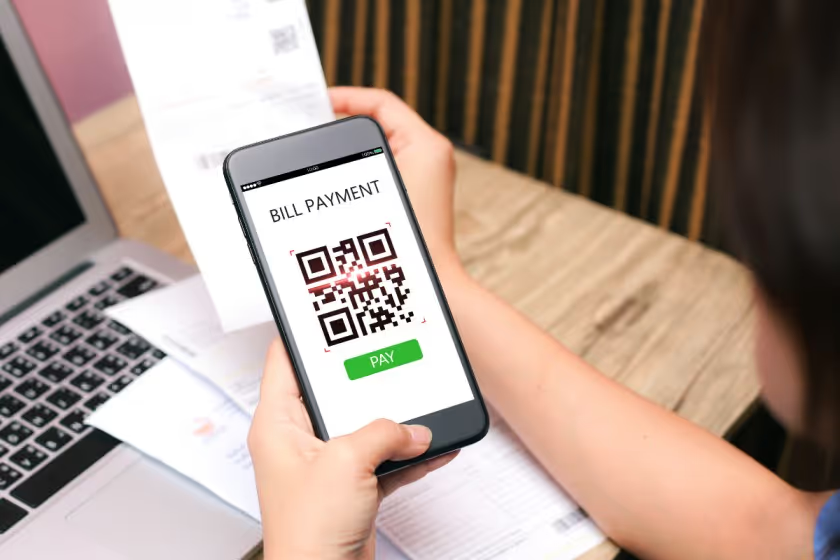
Code Exchange is another effective way to collect first-party data for loyalty programs. Unlike other forms of data collection, it is done via code scanning. Codes can be printed in the packaging and distributed to end consumers through offline channels. Instead of uploading receipts, end consumers will upload codes to the loyalty dashboard. The codes will be validated, and points will be awarded based on the rules set for each code.
This can be simplified for users who don't want to scan the receipts. By entering the code into the website or app of the brand, users can unlock rewards. Non-loyalty members are also encouraged to join the loyalty program.
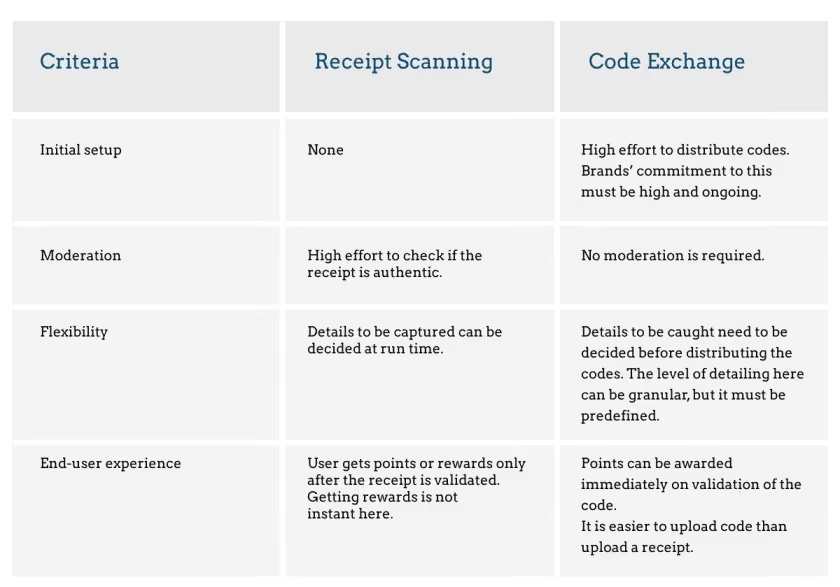
Both methods include efforts from the user side. But the efforts from brands' perspectives differ. Users already take receipts for the products they buy. The initial setup for this feature is almost negligible. But to establish a unique code per product, brands will need to strategize the distribution of codes and maintain the authenticity.
Here is a comparison between both features based on some key factors.
Receipt Scanning Vs Code Exchange
Through code exchange, brands can engage customers or prospects in offline events and meetups. The very basic and most popular use case of code exchange is to engage customers for feedback. Below are some more use cases where code submission can create more opportunities for brands.
Use cases where code submission can be helpful:
- A brand that wants to sell through partners can engage end customers for product feedback.
The codes can be printed on the product contents. Customers can sign up for the program using the code, and the brand can build a community of users for feedback. - A brand wants to set up a loyalty program for offline purchases. Points can be awarded based on the product purchased.
The brand can generate different batches of codes and set the rules to award a certain number of points for each batch based on the batch name. - B2B vendor at a conference wants to generate leads. The vendor can print codes on some giveaway items and hand the items out at the conference.
- A marketer wants to encourage subscribers to check the content with gamification of email. The marketer can generate codes in TrueLoyal and upload those to their ESP. Each recipient will get a unique code “hidden” somewhere in the email. There could be more than one hidden code per recipient. Recipients will get points for every code that they find.
Conclusion
First-party data holds unique importance for precision marketing. It becomes easy to get data, offer rewards, and keep customers engaged with a direct connection. After the pandemic, getting data from multiple channels has become essential and unifying it to produce meaningful insights. TrueLoyal's receipt scanning & code submission functionality is empowering brands to be more informed and improve loyalty programs' performance. With expertise in customer loyalty management, TrueLoyal's loyalty platform enables brands to use data from multiple sources and make informed decisions to beat revenue goals.