Loyalty Programs Were Built for Data. Privacy Laws Are Changing the Rules.
By Max Savransky, Global Director of Loyalty Strategy, TrueLoyal
Literally nobody gets excited about data privacy laws. Not marketers, not loyalty managers and definitely not the people who have to sit through compliance briefings. But - GDPR, CCPA, LGPD, PIPEDA, and the growing family of global privacy regulations are now squarely aimed at data practices that loyalty programs depend on. And ignoring them won’t make them go away.
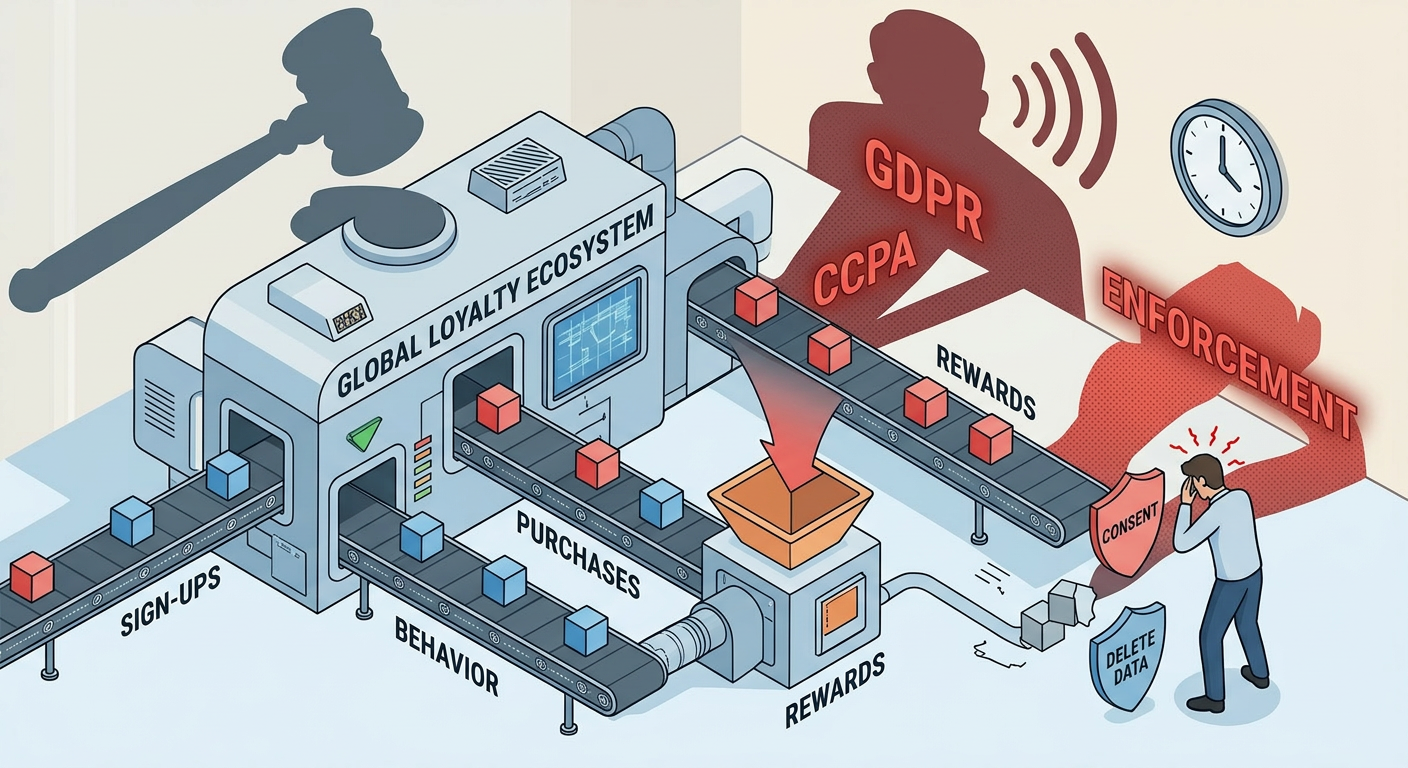
Many brands assume their existing privacy policies already cover their loyalty programs. In reality, loyalty environments often sit across multiple systems - POS, CRM, CDP, marketing platforms and naturally the loyalty platform itself.
That fragmented architecture makes it significantly harder to track where member data lives, how it is used, and how it can be retrieved or deleted when required. In practice, this is where many organizations discover that regulatory compliance is not just a legal exercise, but a technology and data architecture challenge as well.
This blog is not legal advice. Instead, for any brand running or aiming to launch a loyalty program, I will aim to outline what compliance actually means, what readiness might look like, and what considerations to look out for, in conjunction with your loyalty platform vendor.
What Are These Regulations Actually Saying?
GDPR (General Data Protection Regulation) has been in effect across the European Union since May 2018. In simple terms, it says that if you collect personal data from EU residents, regardless of where your business is based, you need explicit consent, a clear reason for collecting it, and a robust plan to protect it. Non-compliance carries fines of up to €20 million or 4% of global annual turnover, whichever is higher. In 2024 alone, regulators issued over €1.2 billion in GDPR fines.
CCPA (California Consumer Privacy Act), now strengthened by the CPRA (California Privacy Rights Act), operates a bit differently. It uses an opt-out model rather than opt-in. But it gives California residents meaningful rights: the right to know what data has been collected, the right to delete it, and the right to opt out of its sale or sharing. As of January 2025, the 30-day cure period is gone, and violations result in immediate penalties.
And it's not just Europe and California anymore. Brazil has the LGPD. Canada has PIPEDA. Over 20 U.S. states have enacted comprehensive privacy laws, with Colorado's CPA even creating specific "Bona Fide Loyalty Program" definitions.
Therefore, regulators are serious on a global scale.
Why Loyalty Programs Are Exposed
Most brands will know that loyalty programs are distinctly different from a simple newsletter signup. A loyalty program collects a lot of data: email addresses, purchase histories, geolocation, demographic information, behavioural patterns, and increasingly, zero-party data through surveys and polls. That's a rich dataset and regulators know it.
Modern loyalty programs also rely heavily on behavioural profiling. Purchase behaviour, browsing activity and engagement data are often used to segment members and personalize offers or rewards.
Under regulations such as GDPR, this type of profiling can fall under additional scrutiny, particularly when automated decision-making materially affects the consumer. That means brands need to be clear about how this data is used and ensure members understand and consent to it.
In January 2022, California's Attorney General sent enforcement letters to major corporations in retail, travel, home improvement, and food services, specifically targeting their loyalty programs for CCPA non-compliance. Enforcement actions involving large consumer datasets have also increasingly included loyalty environments where that data sits. Sephora was fined $1.2 million in 2022. The message was clear: loyalty programs are firmly on regulators’ radar.
Under CCPA, if your loyalty program offers a discount or reward in exchange for personal data, that's legally classified as a "financial incentive", which triggers a specific disclosure requirement. Brands need to explain what data they are collecting, why, and how the value of that data relates to the benefit being offered. It's not enough to bury it in their privacy policy.
There’s A Difference Between Compliance And Readiness
Compliance means the brand has met the minimum requirements of the law right now. Readiness means the brand’s program is structured to stay compliant as the regulatory environment evolves. The distinction matters because these laws keep changing. The best brands aren't scrambling to comply - they've built privacy into how their loyalty program works from the ground up.
The concept of Privacy by Design, pioneered by Ann Cavoukian and formally embedded within GDPR (Article 25), is central to this thinking. Broadly, it's not just good compliance practice, it is increasingly what regulators expect. It means consent mechanisms are built into the member journey and data minimization is a design principle rather than an afterthought. And members should be able to find, access, and delete their data without needing to call customer support.
What Your Loyalty Platform Vendor Should Be Doing
When you partner with a loyalty platform vendor, you're entering into a data processing relationship. That vendor is handling your members' personal data. If they don’t have the right controls in place, your brand may be exposed too. Of course, this relationship is a two way street and as alluded to earlier in the article, is likely just one of multiple platforms that your brand has a data processing relationship with.
Generally speaking, though, here are some considerations on what to look out for.
Consent management that works
Not a checkbox buried in the sign-up flow. Proper, granular consent that tells members what they're agreeing to, for what purpose, and how to change their mind later. This is the responsibility of whichever platform controls the sign-up flow.
Data subject rights support
Under GDPR, members can request access to their data, ask for corrections, or request deletion. Under CCPA, they can opt out of data sharing. Your loyalty platform needs to support all of this operationally, not just on paper. Many brands underestimate the operational complexity of responding to Data Subject Access Requests across multiple systems within required regulatory timelines.
Data minimization
Collecting data "just in case" isn't compliant, and Colorado's CPA is especially explicit about this for loyalty programs. A good platform collects what's necessary for the program to function, and no more. Naturally, should a business strategy exist to collect more data, the purpose will need to be clearly articulated.
Data retention policies
GDPR prohibits storing personal data longer than necessary. Your loyalty platform should have clear retention schedules and the ability to purge data automatically when it's no longer needed.
Security infrastructure
Encryption at rest and in transit, role-based access controls, regular audits, and breach notification capabilities should exist. Certifications such as SOC 2 or ISO 27001 are commonly expected indicators that enterprise-grade security and governance controls are in place.
Third-party data sharing disclosure
If your loyalty platform shares member data with analytics providers or ad networks, that likely triggers CCPA's "Do Not Sell or Share" requirements. It should be clearly disclosed, with a visible opt-out mechanism.
Summary
Data privacy isn't a legal department problem anymore. Rather, it's a brand problem. Customers are more aware of their rights than ever, and regulators have proved they'll act. Loyalty programs, which sit on top of rich member data, are an obvious enforcement target.
The good news is that getting this right isn't just about staying out of trouble. A compliance-first loyalty program is a trust-first loyalty program. And developing consumer trust is actually a pretty good retention tool.
The brands that build transparent data practices into their loyalty programs from the start don't just avoid fines and regulatory problems: they earn higher engagement, better opt-in rates, and the kind of customer loyalty that actually compounds over time. Privacy done right is loyalty done right.
_____________________________________________________________________________________
Max Savransky is the Global Director of Loyalty Strategy at TrueLoyal. Max is a customer strategy, loyalty and data leader, with a proven 17-year track record of designing, validating and deploying successful client strategies to drive engagement, retention and revenue growth. Max is also one of the co-authors of 'Loyalty Programs The Complete Guide' (editions 1 and 2), the definitive book on loyalty for industry professionals.
_____________________________________________________________________________________
TrueLoyal regularly works with brands to assess loyalty program privacy readiness before launch or international expansion. If you'd like to run a quick assessment of your program architecture, our team can help.